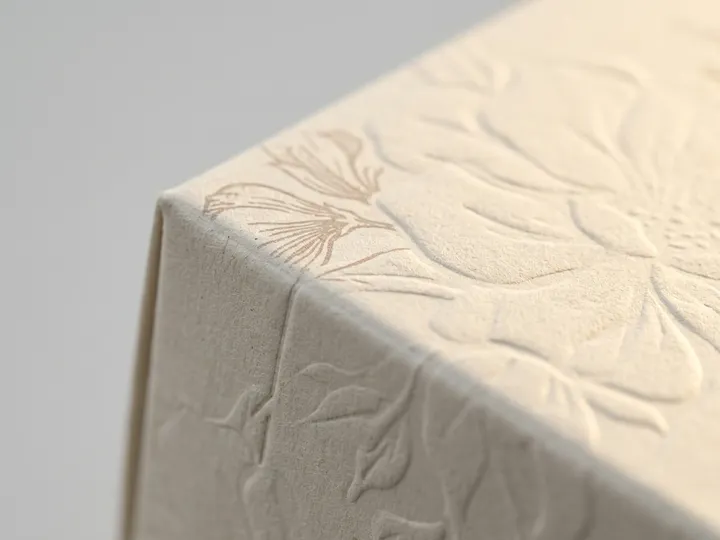
Embossing across a folded edge
Approve relief depth and edge definition while checking that the textured board does not crack around scores.
Zero wasted space. Save 20% on shipping.
Custom sizing. No die or setup fees.
Skip DIY. Free expert design support.
Essential oil bottle packaging
Plan custom essential oil boxes around a one-piece fold-over carton, integrated paperboard bottle holder, textured ivory stock, restrained spot-color artwork, and ink-free floral embossing. Bottle fit, board grain, relief depth, and pack-out protection are confirmed through physical samples.
Structure
One-piece fold-over carton with two opening wings and an integrated paperboard bottle hold
Material direction
300–350 gsm textured off-white specialty paperboard, subject to mill-sample approval
Surface route
Low-saturation spot print plus blind floral embossing on an unlaminated tactile surface
Visual proof points
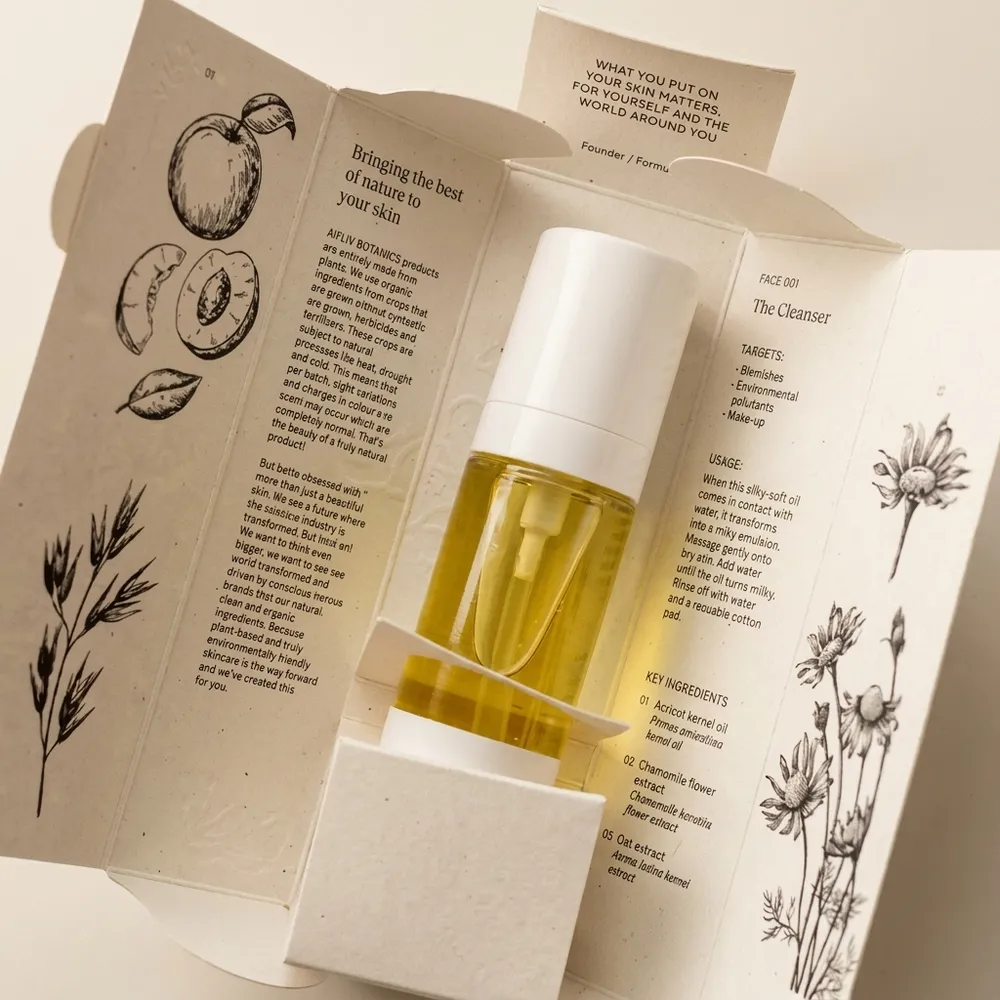
These proof images isolate the decisions that affect a custom essential oil box: folded form, integrated bottle support, emboss response, printed edge quality, and secondary shipping protection.
Landing page reference
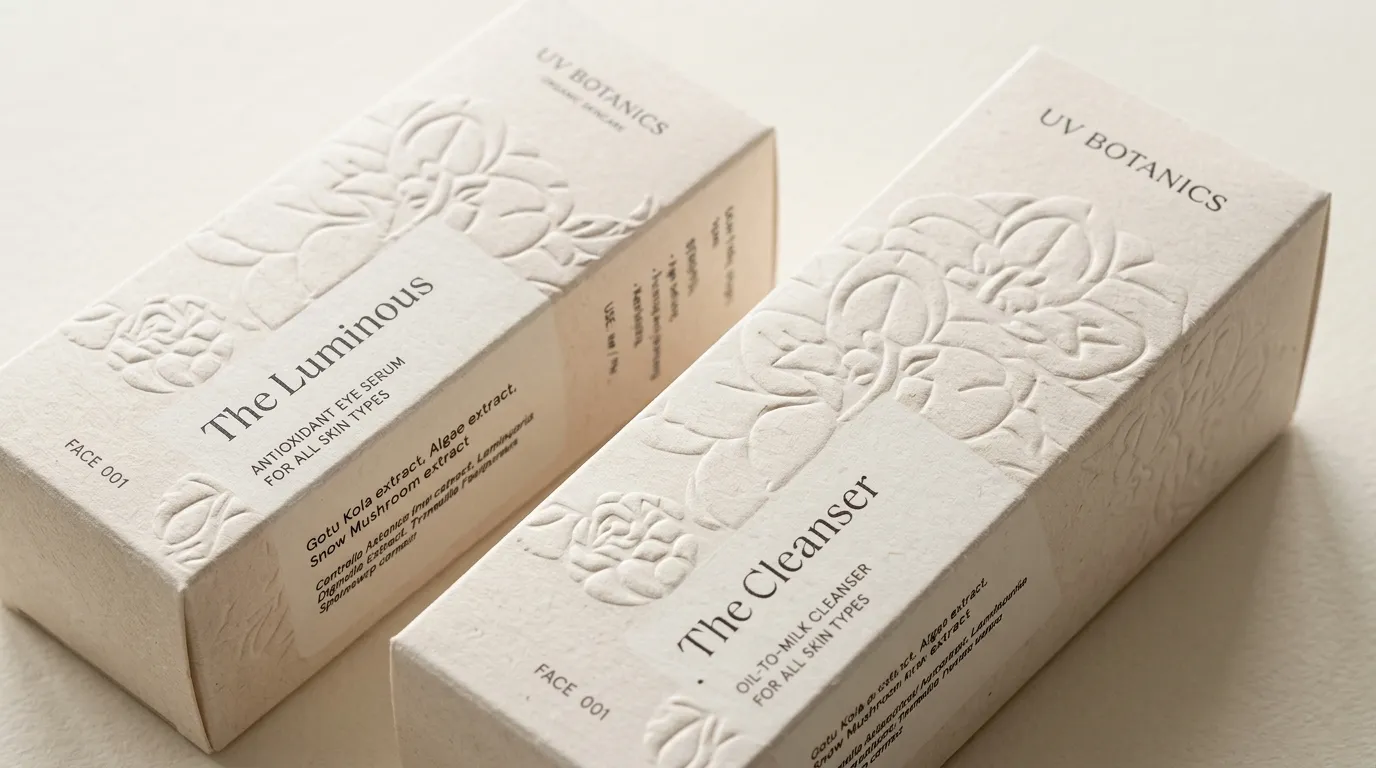
Confirm finished proportions, panel alignment, ivory stock shade, and how the floral relief crosses the presentation face.
Structure reference
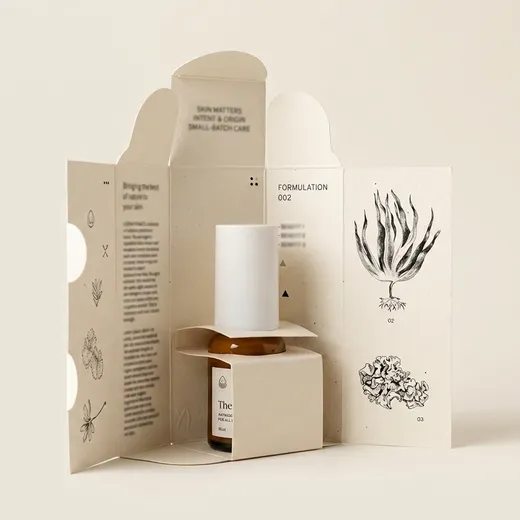
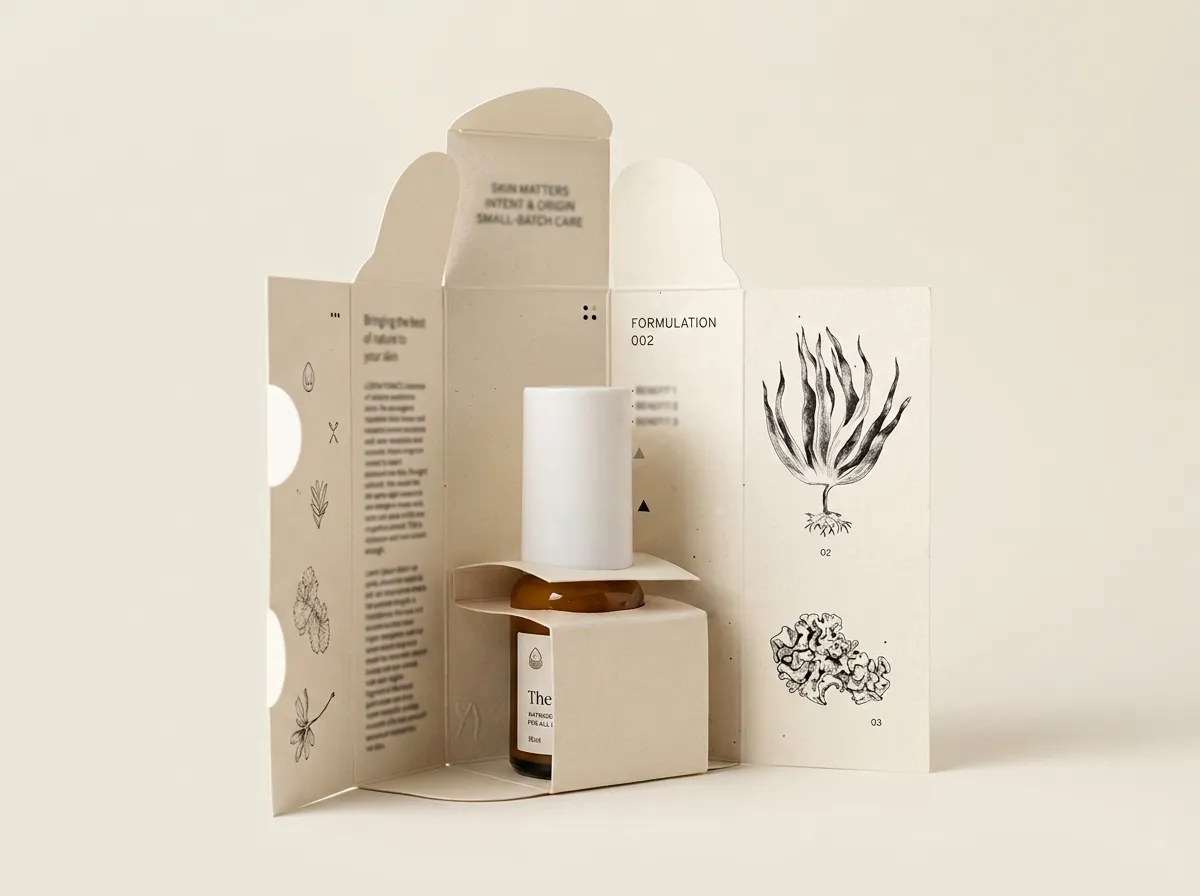
Use the real filled bottle to approve diameter clearance, cap height, removal access, and hold strength.
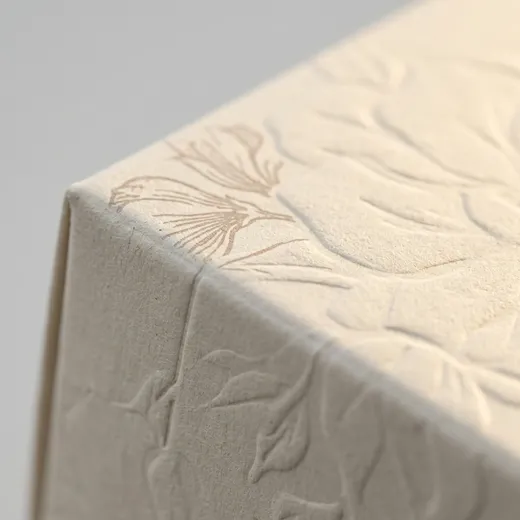
Approve relief depth and edge definition while checking that the textured board does not crack around scores.
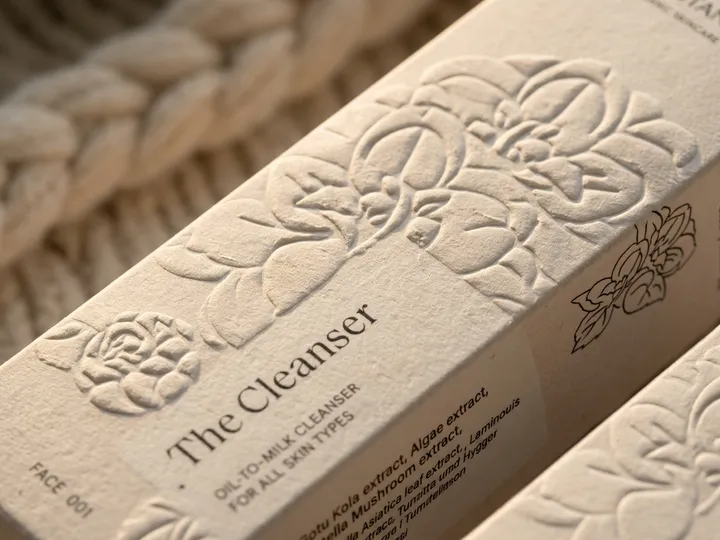
Review ink density, fine-line artwork, small-copy legibility, and contrast on the actual off-white stock.
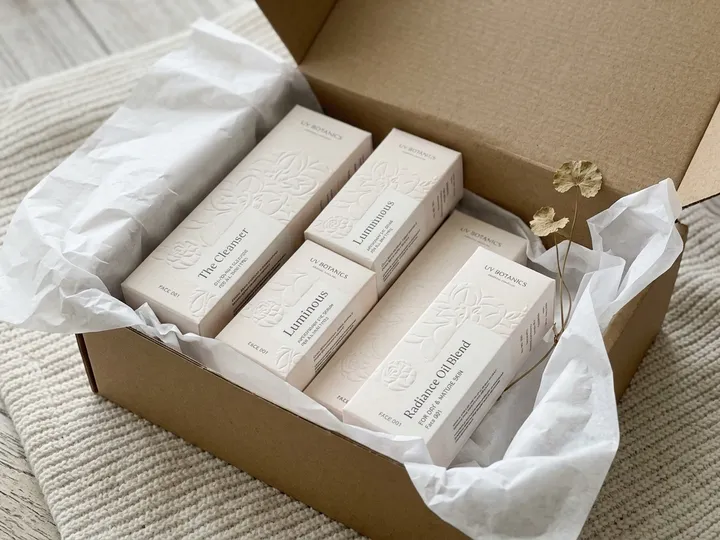
The retail carton still needs a tested shipping configuration that controls movement, abrasion, and edge pressure.
Customization options
Compare tactile specialty stock, controlled spot printing, embossing, and lower-impact ink routes as a coordinated production system.
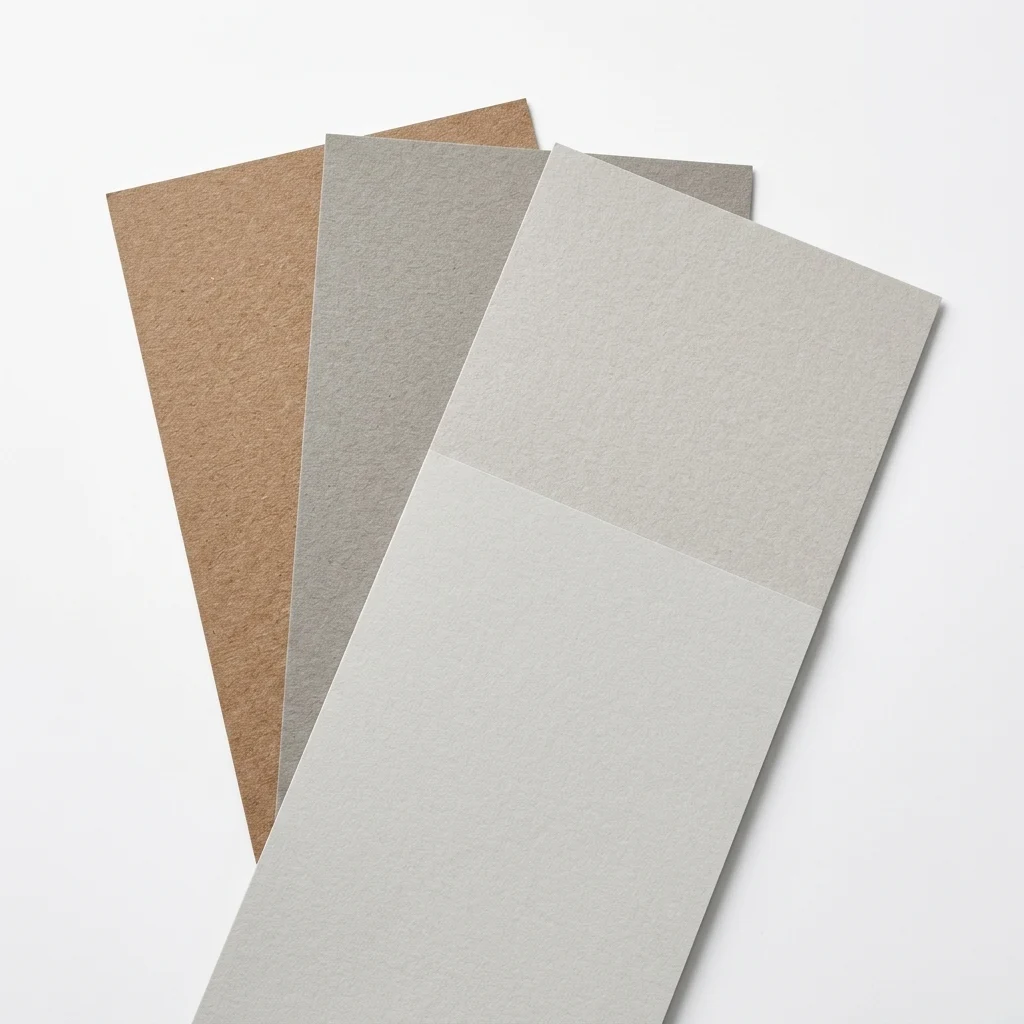
Material / Art Paper
Pearlescent, tactile, or textured paper for a more expressive premium surface.
Review this option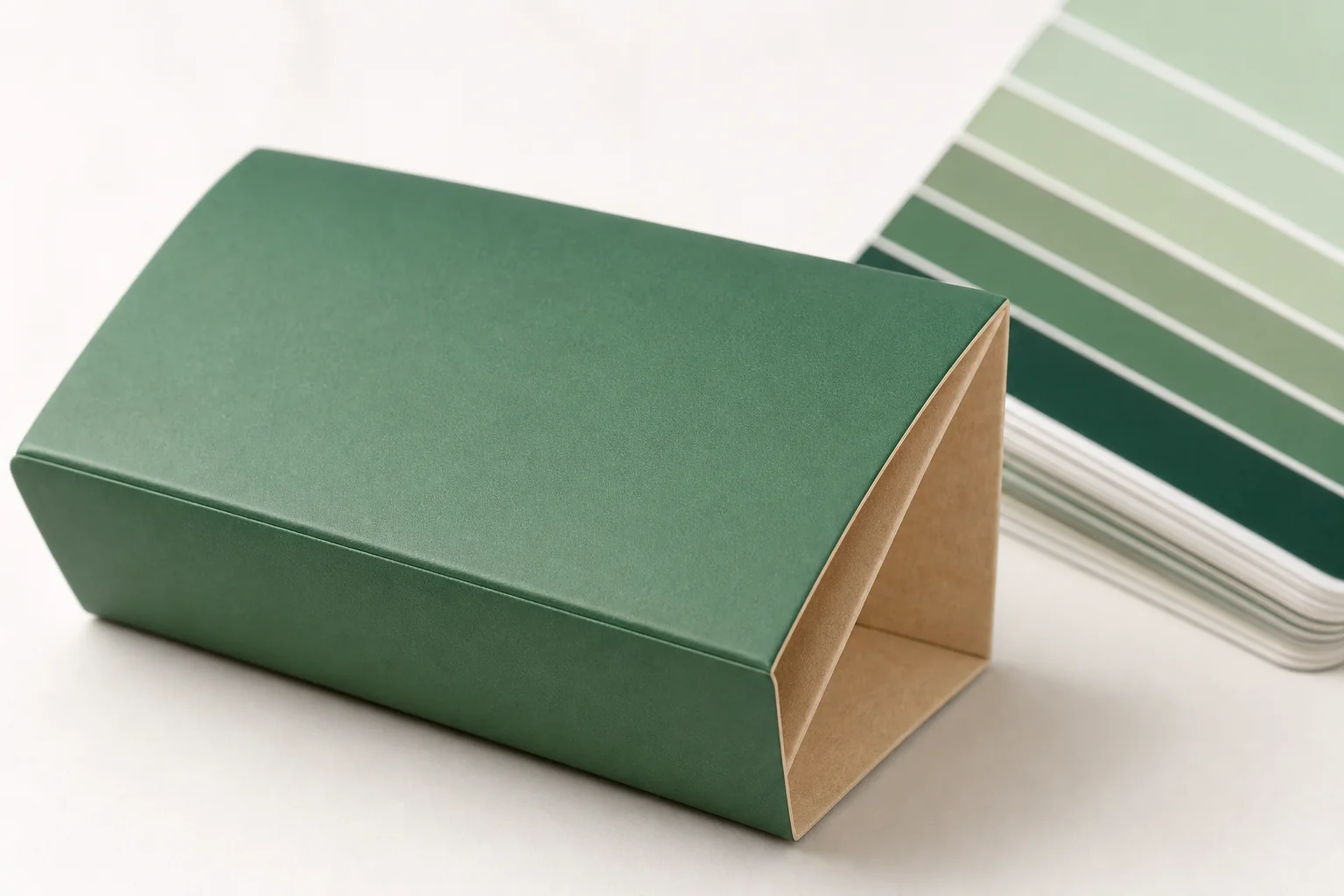
Printing / Print Method
Spot color printing for strict brand color control and high-end customization.
Review this option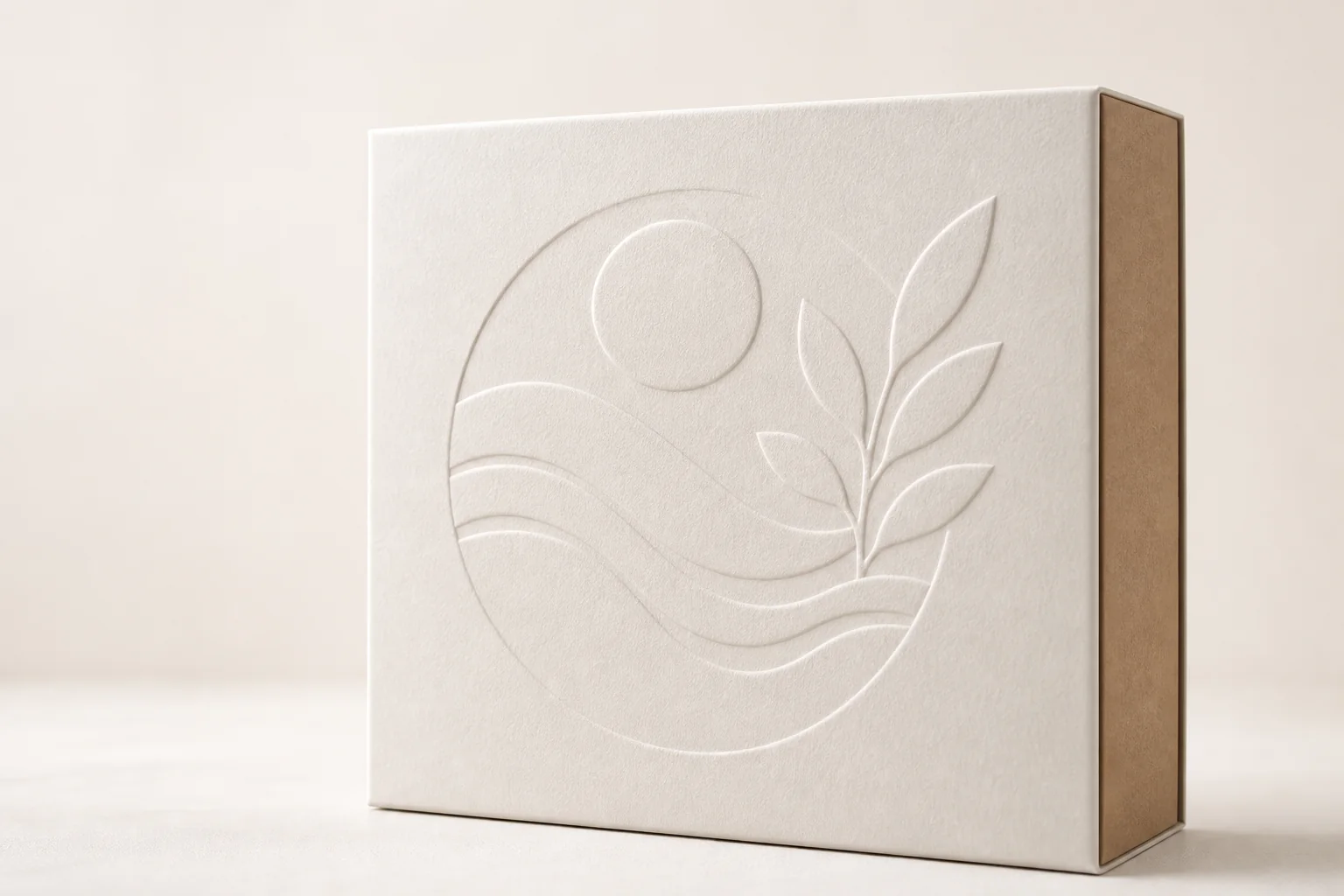
Finishing / Visual
Raised detail that adds tactile emphasis to logos or decorative artwork.
Review this option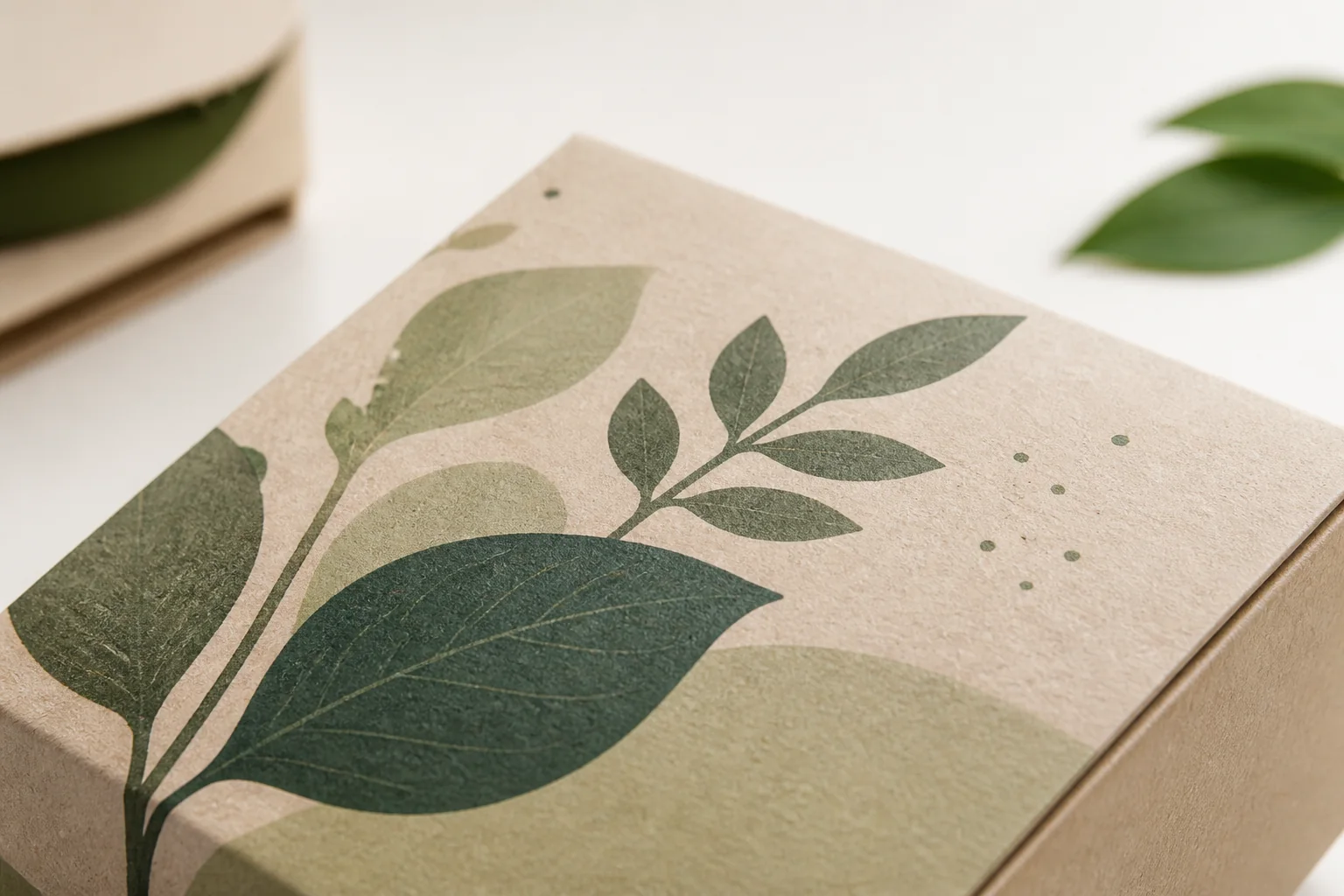
Printing / Ink System
Lower-impact ink route commonly used for paper packaging and retail cartons.
Review this optionPrint and finish route
The visual effect relies on paper texture, quiet ink coverage, and pressure-formed relief rather than film, foil, or high-gloss decoration.
A naturally tactile off-white surface supports the restrained botanical direction without a glossy film.
Approve shade, fiber texture, stiffness, print absorption, scoring, and batch tolerance from physical board samples.
A matched die creates ink-free raised and recessed flowers across the outer panel.
Confirm relief depth, register, fold clearance, reverse-side show-through, and cracking risk on the chosen stock.
Warm grey or muted brown line art and copy keep the artwork legible while preserving the paper-led appearance.
Proof the selected spot color on the actual uncoated board because absorption can soften fine lines and shift tone.
Artwork element
Production route
Effect on this box
Proofing check
Floral relief
Matched blind-emboss die
Tactile botanical depth without foil or printed fill.
Keep critical relief away from tight scores and verify die pressure on production stock.
Brand and product name
One spot color
Quiet, controlled hierarchy on the ivory surface.
Approve density and small type on the real textured paper.
Interior instructions
One-color inside print
Turns both opening wings into usable education panels.
Confirm reading order, copy safety margins, and panel orientation on the dieline.
Bottle holder
Die-cut and scored with the carton
Positions one cylindrical bottle without a separate foam insert.
Fit-test filled weight, cap clearance, removal force, and repeated opening.
Specification summary
Treat these values as the starting production brief; final dimensions, stock, tolerances, and protection requirements follow the supplied bottle and approved sample.
Packaging type
Custom essential oil boxes for one cylindrical glass bottle or similar skincare oil format
Box structure
One-piece die-cut fold-over presentation carton with two opening wings and integrated paperboard hold
Board direction
300–350 gsm textured off-white specialty board; exact grade and recycled content require supplier documentation
Print direction
One low-saturation spot color outside and inside, with fine botanical illustration and product copy
Primary finish
Blind floral embossing; unlaminated tactile surface in the supplied reference
Insert system
Integrated die-cut paperboard tabs and folded support, engineered around the real bottle
Secondary packing
Protective mailer or shipper selected after abrasion, movement, and transit review
Cost drivers
Finished size, board grade, emboss area and die, inside print, dieline complexity, quantity, packing, and delivery
Buyer decisions
The structure is more complex than a standard tuck carton, so bottle geometry, paper behavior, emboss pressure, and assembly sequence should be solved together.
Bottle diameter
Height with cap
Filled weight
Target quantity
Artwork and copy
Board preference
Emboss area
Delivery country
Textured specialty board, no film
Dry tactile presentation and visible paper character
Requires stain, rub, and fold-crack testing
Smooth SBS paperboard
Sharper small copy and predictable color
Loses some of the natural textured appearance
Blind emboss + one spot color
Restrained botanical artwork with tactile depth
Adds tooling and register checks near folds
Compatible low-gloss coating
Projects needing more handling resistance
Can reduce the dry paper feel and must be sample-tested
Also suitable for
Proof before mass production
White structural sample: Checks wing opening, bottle retention, removal force, assembly time, and closure alignment.
Printed board proof: Checks ivory shade, spot-color density, fine copy, inside-panel orientation, and rub behavior.
Emboss and pack-out sample: Checks relief depth, score cracking, carton abrasion, and secondary shipping support.
Sampling and production path
Approve the fit and paper behavior before locking the detailed botanical artwork or emboss die.
1
Record diameter, height with cap, shoulder form, filled weight, label position, and preferred removal direction.
2
Build a white sample to review wing movement, integrated tabs, bottle hold, closure, assembly, and panel sequence.
3
Compare candidate textured boards and print the chosen muted spot color on the real stock.
4
Review relief depth, fold cracking, inside copy, finished fit, abrasion risk, and the secondary shipping configuration.
5
Confirm board batch, dieline, die, print standard, packing method, quantity, and delivery requirements.
Structure reference
This is a specialty die-cut folding carton rather than a standard tuck-end box. The opening wings provide information space while the central paperboard geometry holds and presents one bottle.
The bottle is revealed between two printed wings, combining product education and a guided unboxing sequence in one die-cut blank.
Cut and folded tabs can replace a separate foam insert when bottle weight, retention, and transit testing support that route.
The exterior stays quiet and tactile while inside panels carry directions, botanical illustrations, and supporting product copy.
Structure baseline
One-piece fold-over paperboard carton with two printed wings and a die-cut integrated bottle holder.
Finish baseline
Textured ivory specialty board, restrained spot-color printing, blind floral embossing, and no lamination in the reference direction.
Critical fit inputs
Bottle diameter, height, shoulder profile, cap clearance, filled weight, removal path, and pack-out orientation.
Commercial inputs
Quantity, artwork readiness, proof expectations, destination, secondary shipping pack, and target launch window.
Details to prepare for factory review
Bottle diameter
Height with cap
Filled weight
Target quantity
Artwork and copy
Board preference
Emboss area
Delivery country
Production FAQ
This reference uses a one-piece die-cut fold-over paperboard carton. Two printed side wings open around a central bottle position, while integrated cut and folded paperboard tabs hold the cylindrical bottle without a separate foam tray.
Yes. The holder and surrounding clearances must be engineered from the actual bottle diameter, overall height with cap, shoulder shape, filled weight, and removal direction. A blank structural sample should be fit-tested before artwork approval.
A matched embossing die presses the floral artwork into the paperboard to create raised and recessed relief. Depth, edge sharpness, fold distance, and the textured stock response should be approved on a physical finish sample.
A 300–350 gsm textured off-white specialty board is the starting direction supplied for this project. The exact recycled-fiber content, shade, grain, stiffness, and cracking resistance must be confirmed from a mill sample rather than inferred from photography.
The reference uses an unlaminated paper surface to retain its dry, tactile character. If handling marks or oil exposure are concerns, compare the untreated stock with a compatible low-gloss coating through rub and stain tests before choosing a finish.
Send the bottle diameter, full height and weight, target quantity, artwork, delivery country, preferred board, emboss coverage, print colors, pack-out method, and any rub, stain, or transit-test expectations.
No direct-shipping claim should be assumed. The presentation carton controls bottle position, but parcel delivery normally needs a fitted mailer or shipping carton selected after packed-product transit testing.
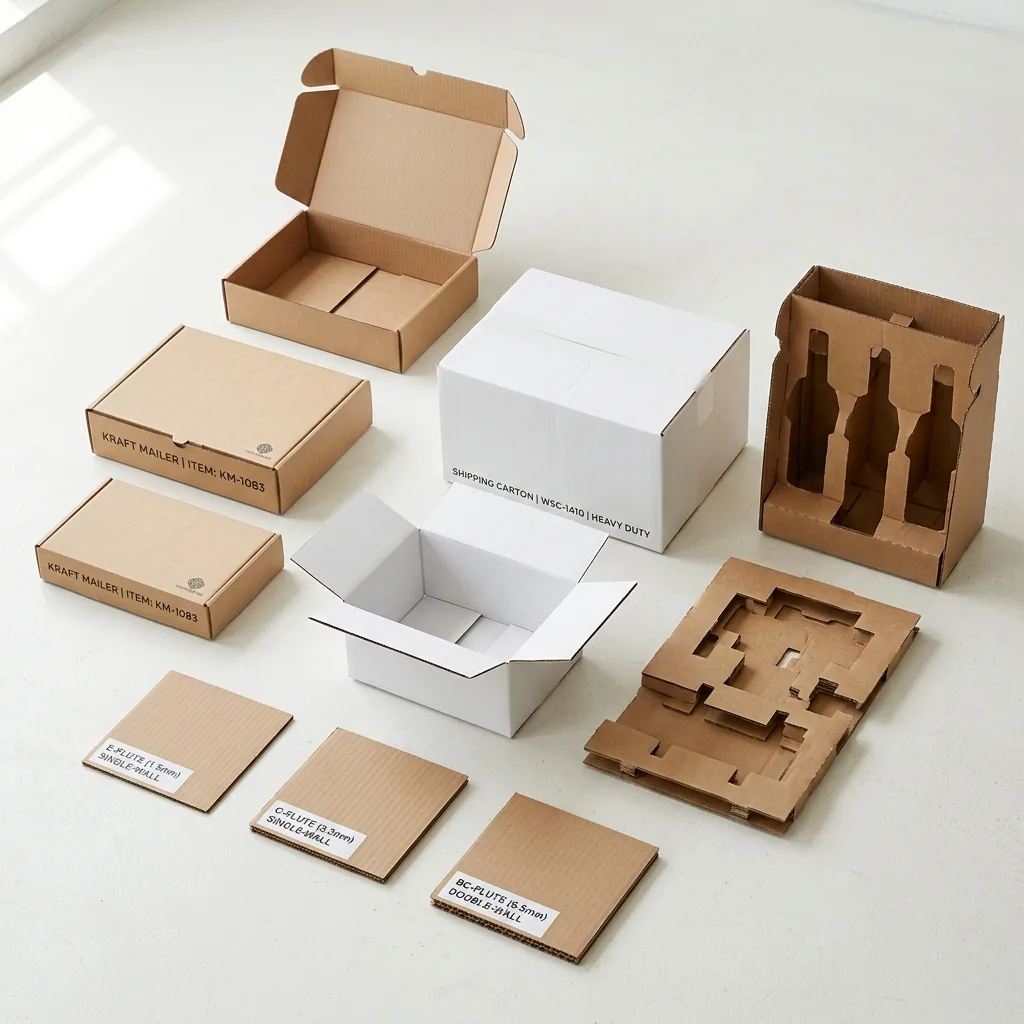 Corrugated Boxes Choose the corrugated box route by shipping risk, product weight, print needs, insert fit, and the opening experience your customer should receive.
 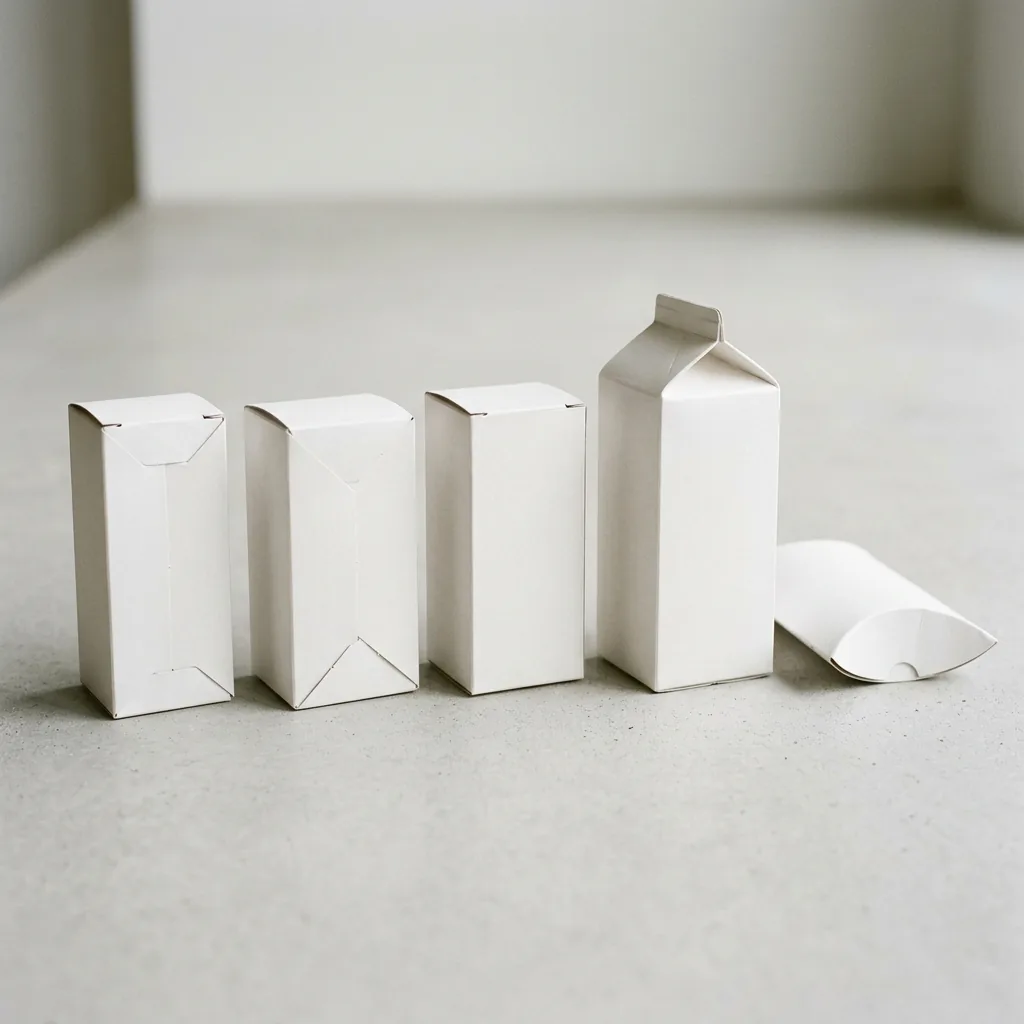 Folding Cartons Compare paperboard carton styles by structure, product fit, material, print area, and production use before choosing a quote-ready packaging path.
 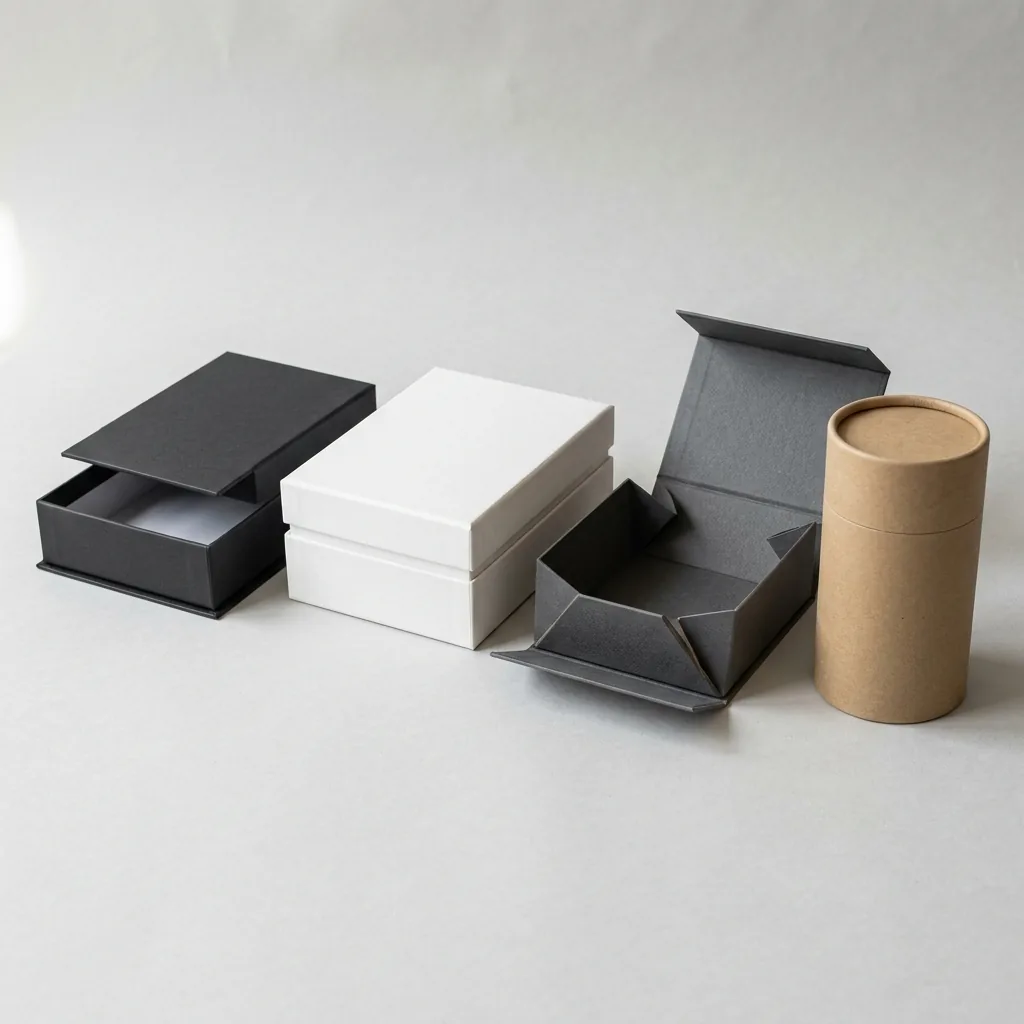 Rigid Boxes Choose rigid boxes when the packaging needs a stronger gift-box feel, durable presentation, premium surface finishing, and a more controlled opening experience.
 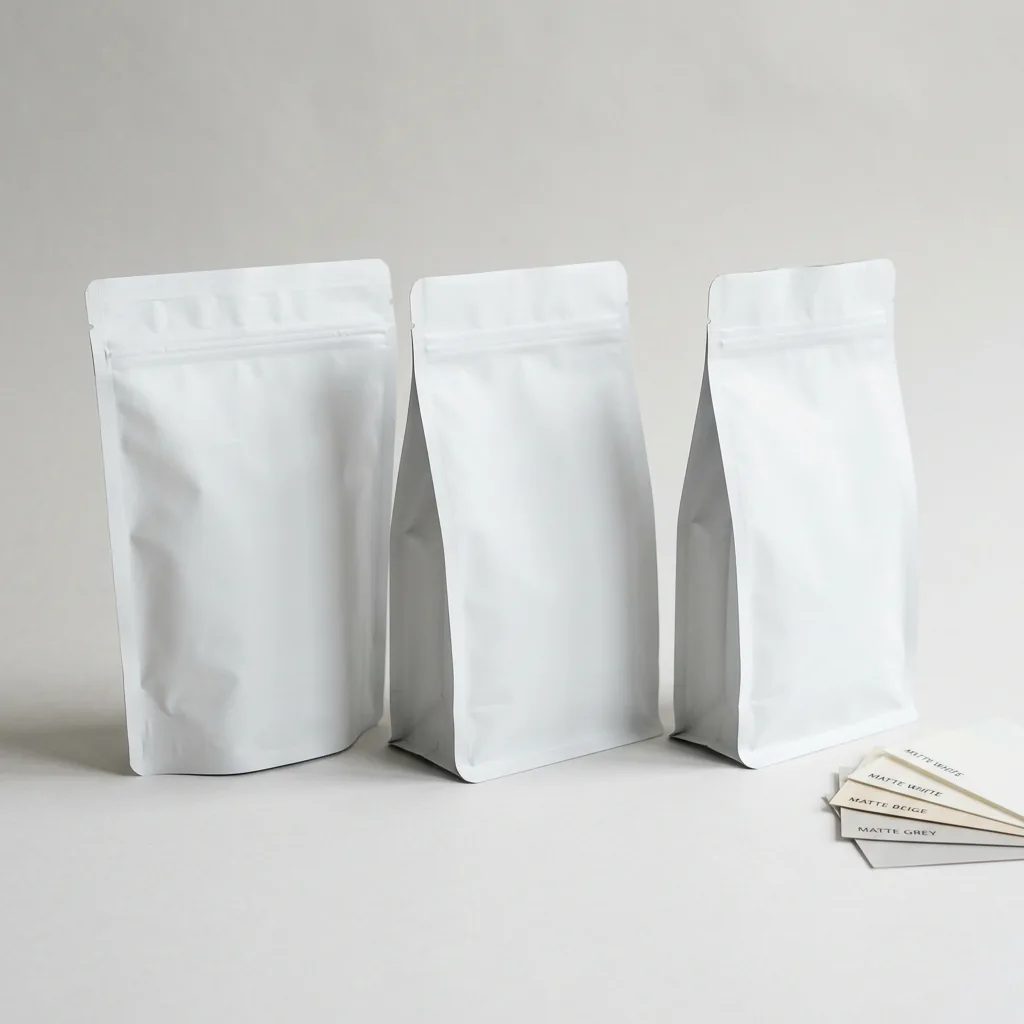 Flexible Pouches Use custom pouches when the packaging needs to stay light, portable, resealable, shelf-friendly, or efficient for food, refills, masks, samples, and pet products.
 Product structures
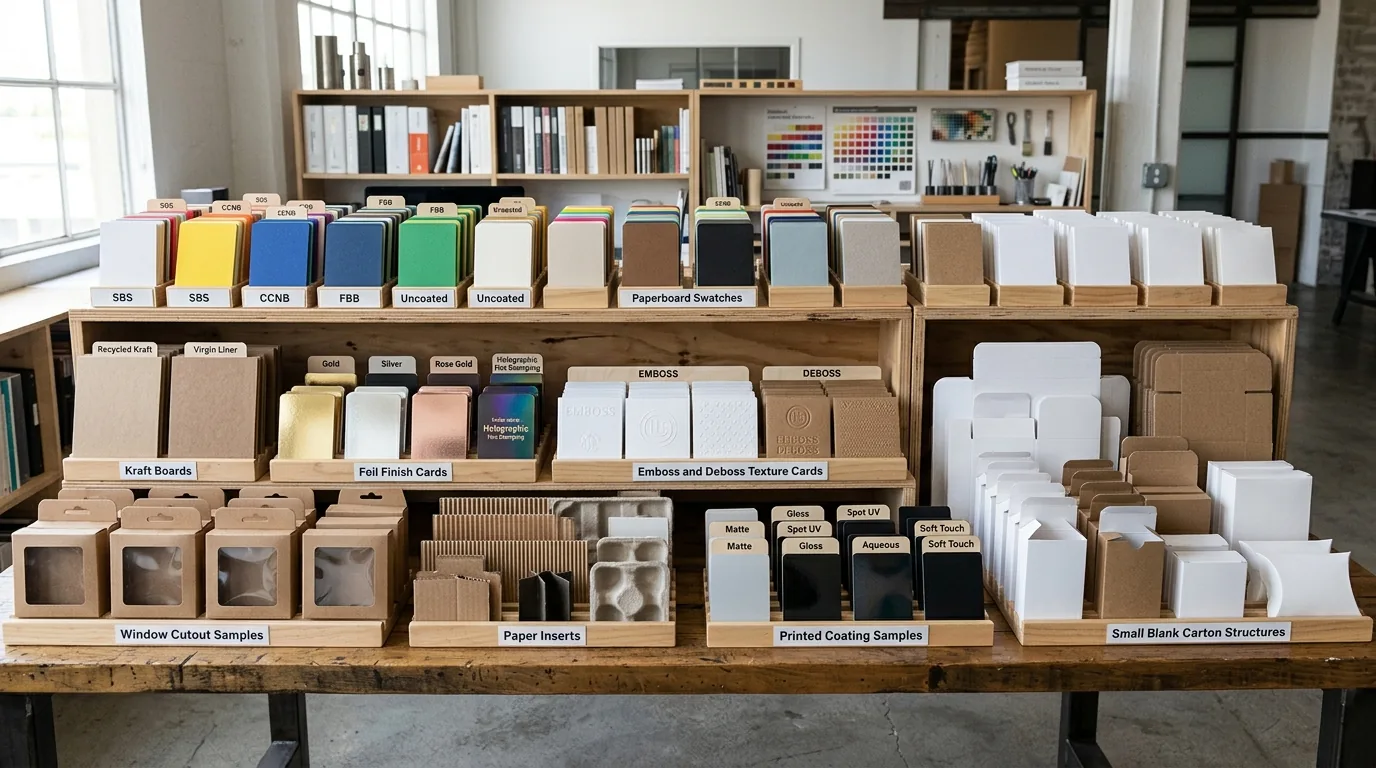
Option Library
Browse materials, print methods, finishes, inserts, and packaging features before choosing a structure.
Browse all options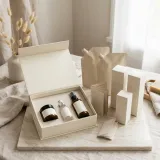 Cosmetics & Skincare Packaging routes for skincare launches, beauty refill sets, cosmetic retail units, and premium PR kits.
  Food & Beverage Packaging Packaging routes for coffee pods, tea, cookies, confectionery, bakery products, snacks, and gift assortments.
  Apparel & Fashion Mailer, pouch, wrap, and gift-ready packaging directions for fashion and lifestyle products.
  Subscription Boxes Packaging ideas for recurring kits, campaign boxes, sample programs, and DTC launch testing.
  Eco-Friendly Packaging Paper-based structures, recycled boards, FSC options, and lower-plastic packaging paths.
 Solution paths
Solution paths
Solution paths
Solution paths
Solution paths
Inspiration Library
Get inspired by browsing creative packaging concepts and see how brands from your industry are designing their packaging.
Browse inspiration library Services overview Compare design, customization, production, and eco support before choosing a project route. Packaging Design Turn a product idea into packaging that is ready for sampling, shelf presentation, and production.
  Packaging Customization Dial in every detail, from board choice and finish to window cutouts, inserts, openings, and small functional touches.
  Packaging Production Move from approved sample to reliable production with global sourcing, low minimums, and pricing built for growing brands.
  Eco Support Build packaging with clearer sustainability choices, including FSC paper, recycled board, soy-based ink, and plastic-reduction options.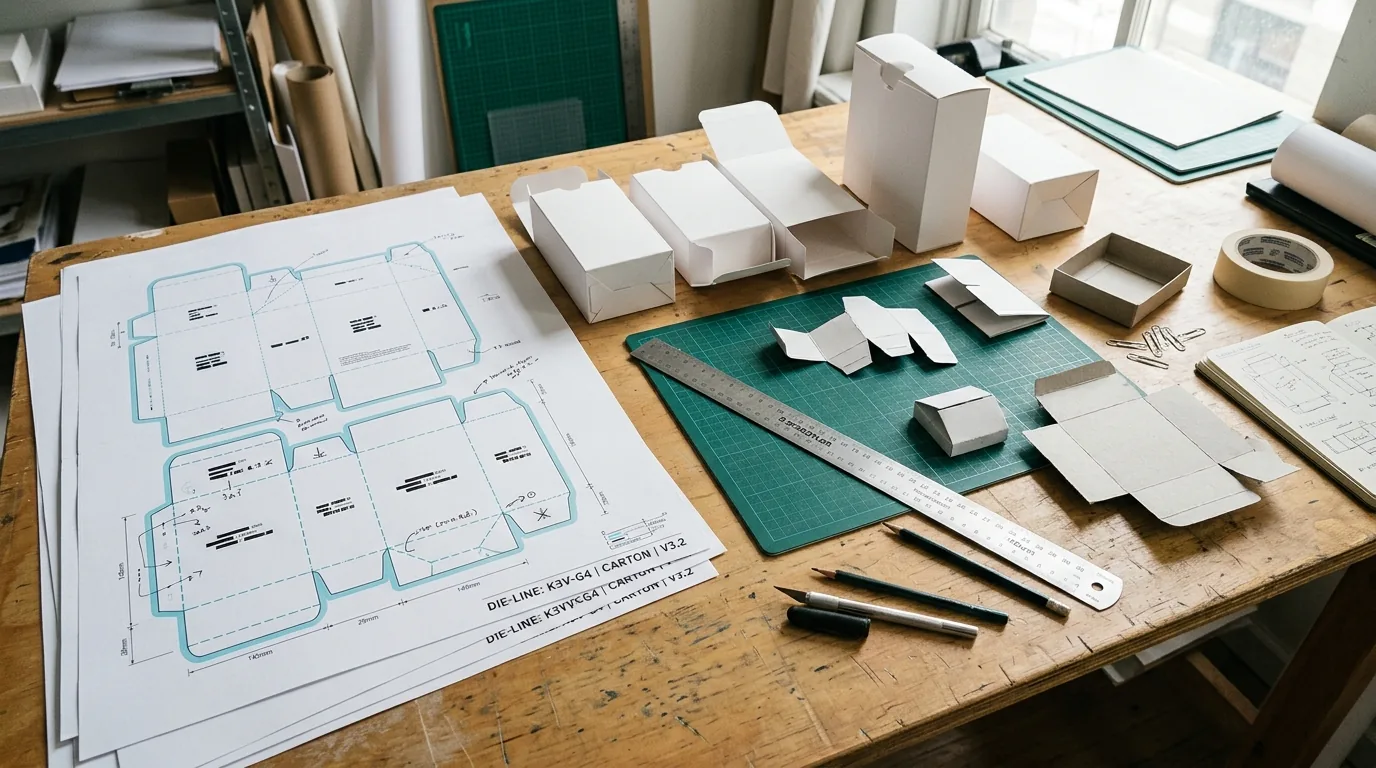
Download 2000+ Templates & Dielines
2000+ customizable packaging templates and dielines, with 3D mockups. 100% customizable. 100% downloadable.
Learn more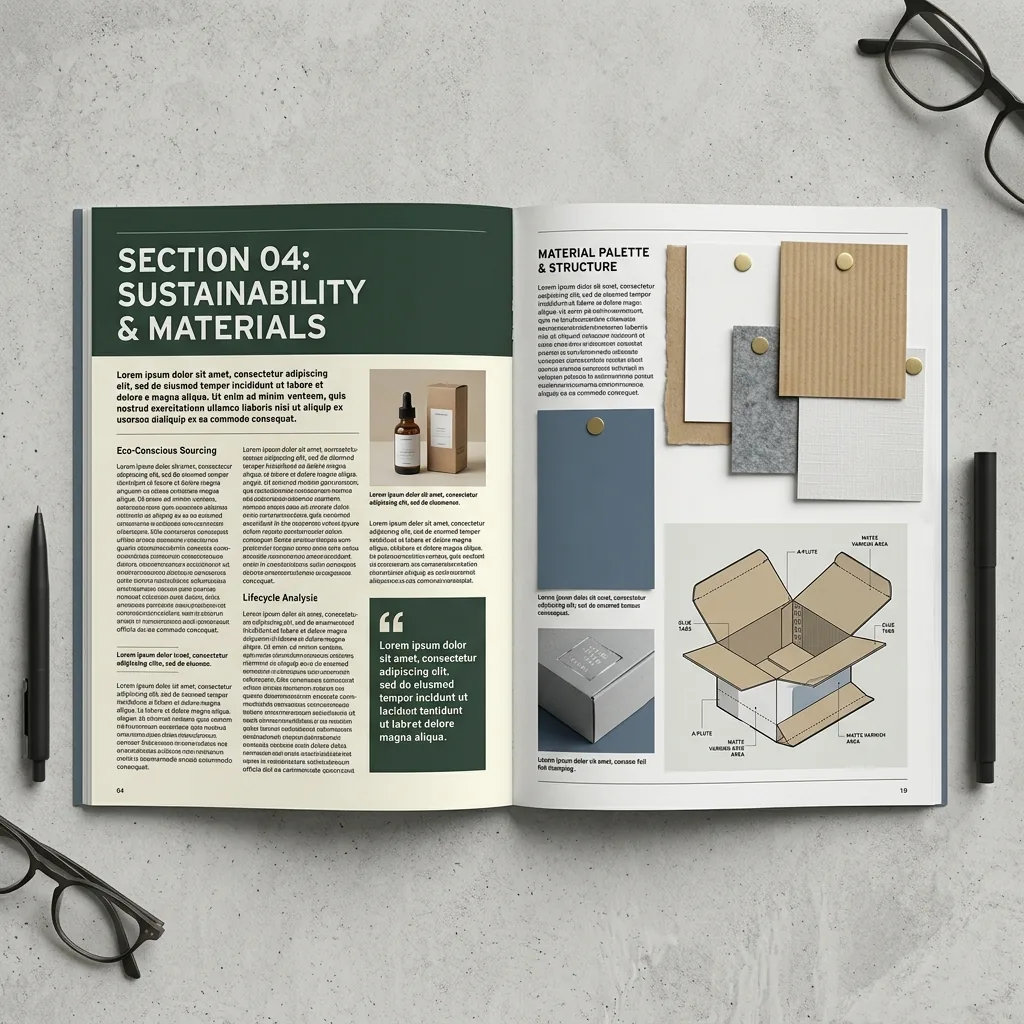 BLOG Read packaging ideas, buyer guides, and material explainers for custom projects.
 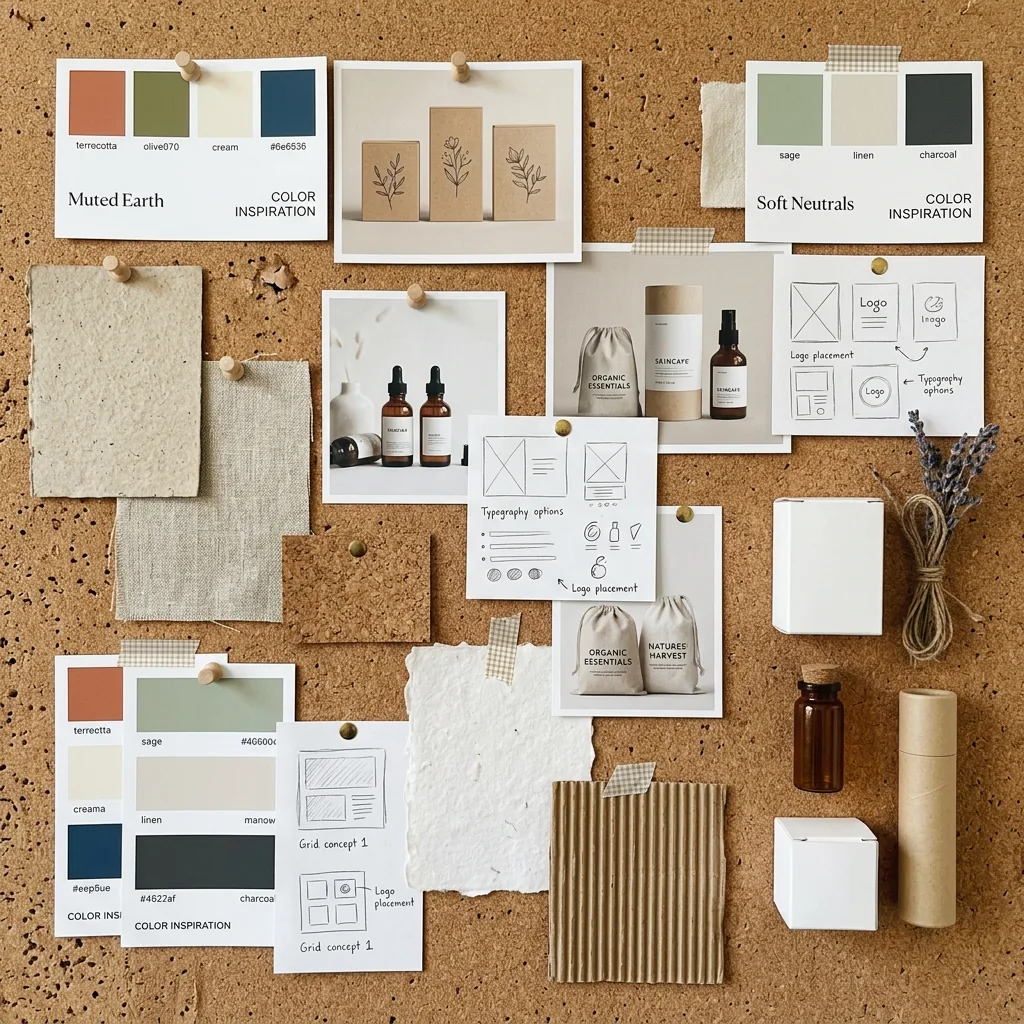 Case Studies Review detailed packaging structures, materials, finishes, fit checks, and production decisions.
 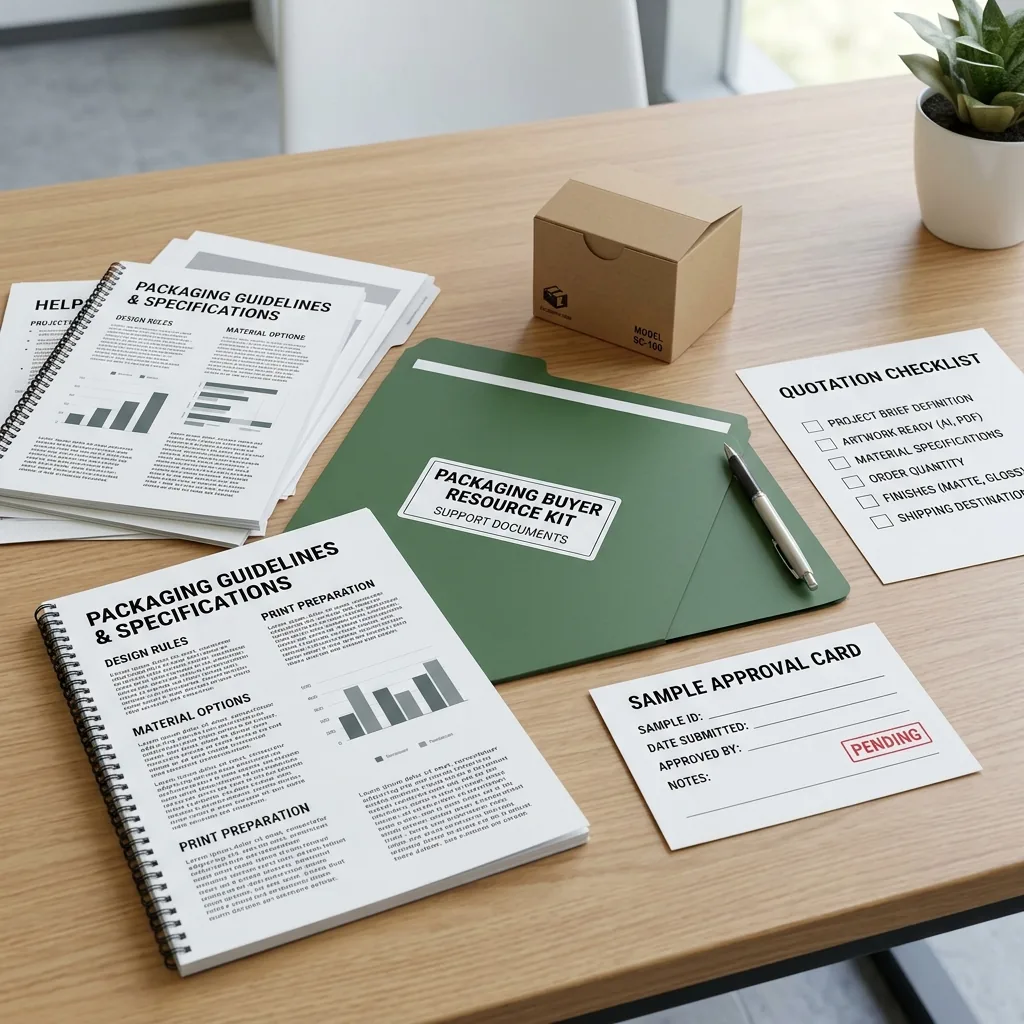 Help Center Find answers for artwork, quotes, samples, production timing, and delivery support. Inspiration Library Browse packaging concepts, industry examples, and launch-ready design directions.
 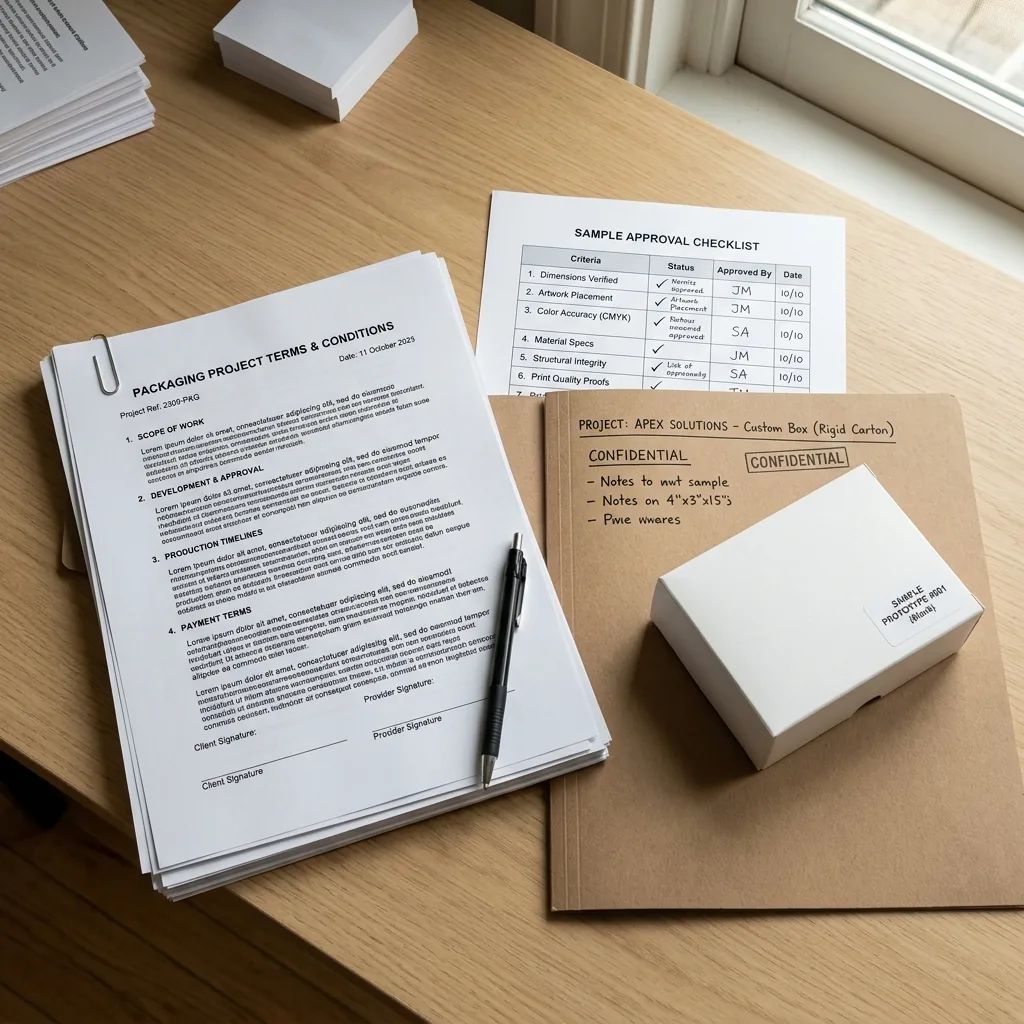 Terms & Conditions Review project, ordering, production, delivery, and website usage terms.
  Privacy Policy See how customer details, quote inquiries, and project information are handled.
Help Center
Get practical answers before you request a quote, from artwork files and sampling steps to production timing, shipping notes, and packaging project details.
Visit help center About YATBRAND Learn how we support custom packaging projects from planning to production.
  Contact Us Share product details, quantities, timelines, and custom packaging goals. Request a quote Send size, quantity, material, artwork, and timeline details for a quote-ready review.
 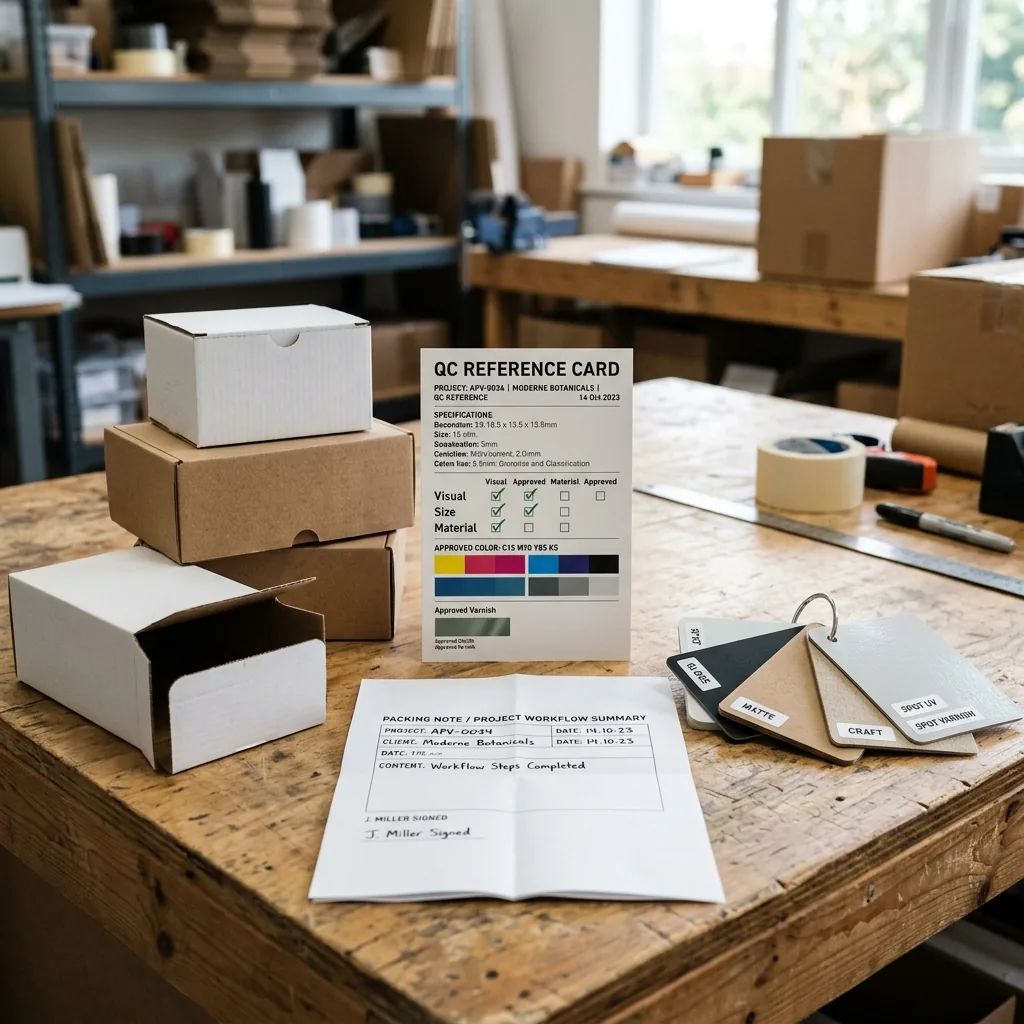 Our Approach See how packaging guidance, samples, production control, and delivery details work together. Quality & Production Review how sampling, production, inspection, and delivery support fit together.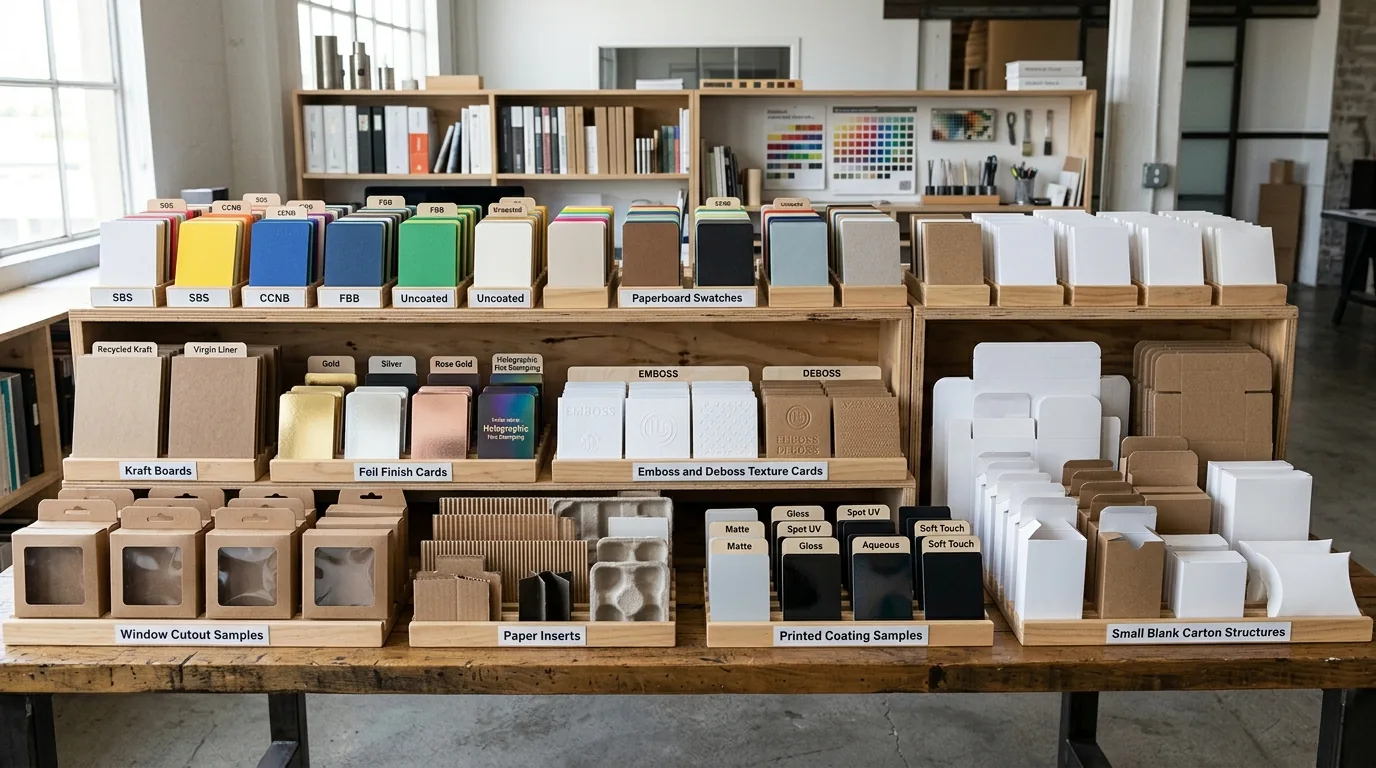
YATBRAND LLC
Custom packaging support for brands that need structure guidance, material options, sampling, quality review, and delivery coordination.
Learn about YATBRAND
Packaging specialist
Ask about structure, materials, samples, or quote details.