Flexible pouch types: choose the structure before the material and print route.
Flexible pouches are not one interchangeable bag format. The base, gussets, seal pattern, closure, and filling method determine whether a pouch can stand, carry more volume, run on packing equipment, or support repeated opening. This guide compares the main structures so buyers can shortlist the right custom pouch before requesting samples and pricing.
Packaging structure, material, and production guidance

Start with function
Pouch structure should follow the product, shelf, and filling process.
Begin with the product volume, weight, shelf-life target, retail presentation, opening pattern, and filling equipment. Use the custom flexible pouches category to compare quote-ready products after the basic structure is clear. A structure that looks attractive in an empty sample may lean after filling, waste headspace, interfere with a zipper, or move poorly through a packing line. Treat finished dimensions, gusset depth, seal area, barrier film, and closure as one production system rather than selecting each item independently.
- ✓ Define fill weight and product bulk density before choosing finished dimensions.
- ✓ Confirm whether the pouch must stand, hang, lie flat, pour, or feed through automated equipment.
- ✓ Plan repeated opening, tamper evidence, and the final top seal together.
- ✓ Test the pouch with the actual product because air, powder, liquid, and irregular pieces behave differently.
Broad retail format
Stand-up pouches suit resealable, shelf-facing products.
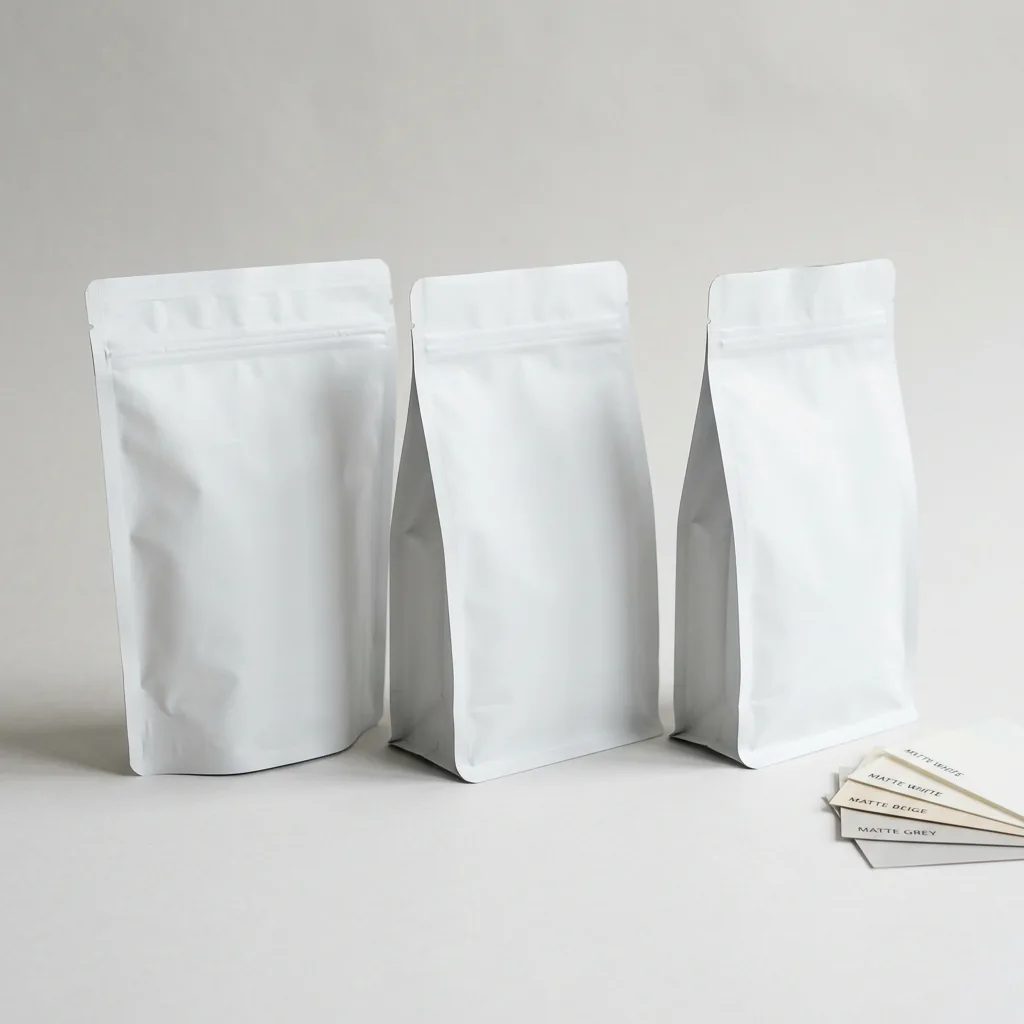
A custom stand-up pouch uses an expanding bottom gusset to form a base after filling. It provides a broad front panel, familiar retail presentation, and space for zipper, tear-notch, window, or hang-hole options. It is widely used for snacks, powders, coffee, pet treats, masks, and refill products, but the base must be sized around fill volume and stability rather than chosen from an empty-pouch appearance.
- ✓ Best when upright shelf presentation and repeated opening matter.
- ✓ Check bottom-gusset opening, zipper height, usable fill area, and top-seal allowance.
- ✓ Do not assume every stand-up format is suitable for liquids without film and seal testing.
- ✓ Compare it with a flat pouch when stand-up display adds cost without buyer value.
Premium shelf block
Flat-bottom pouches add a stable base and printable side panels.
A custom flat-bottom pouch combines a rectangular base with front, back, and side panels, creating a box-like shelf shape. The format can provide stronger shelf blocking and higher usable volume than a conventional stand-up pouch, especially for coffee, premium snacks, powders, and pet products. Extra panels also add artwork transitions and conversion complexity, so the commercial benefit should justify the structure.
- ✓ Choose it when stable premium presentation and side-panel communication create real value.
- ✓ Approve artwork across panel folds and gusset transitions.
- ✓ Check zipper and valve placement against the usable front face.
- ✓ Compare freight, material, and conversion cost with a simpler stand-up pouch.
Capacity-led format
Side-gusset pouches expand for coffee, grains, powders, and dry goods.
Side-gusset pouches use folded side panels that expand as the product fills the bag. Review custom side-gusset bags when capacity, compact storage before filling, and top-seal performance matter more than a wide standing front panel. The final layout should account for gusset folds, valve placement, fill weight, and the way the finished pack will sit or stack.
- ✓ Best for higher-volume dry products and traditional coffee-bag presentation.
- ✓ Confirm whether the finished bag must stand independently or rest against other packs.
- ✓ Keep critical artwork and regulatory copy away from gusset folds.
- ✓ For coffee, evaluate aroma barrier and a one-way degassing valve as part of the structure.
Compact and equipment-led formats
Flat pouches, sachets, spout pouches, and rollstock solve different packing needs.
Flat pouches and three-side-seal bags are efficient for samples, single-use products, small portions, powders, and items that do not need to stand. Spout pouches add a fitment for controlled pouring of liquids, gels, concentrates, and refills. Rollstock is supplied as printed film for form-fill-seal equipment rather than as finished premade bags. These formats should not be grouped under one quotation because the converting process, filling equipment, tooling, and seal validation differ.
- ✓ Use flat pouches when compact size and simple heat sealing matter more than upright display.
- ✓ Use a spout only after confirming fitment size, cap, torque, seal integrity, and filling route.
- ✓ Choose rollstock when compatible packing equipment will form and seal the package in line.
- ✓ Treat sachet dimensions, tear behavior, dose control, and print registration as production specifications.
Shortlist and test
Compare structures with the same product and quote assumptions.
A useful comparison keeps fill weight, shelf-life requirement, quantity, SKU count, print coverage, and delivery route constant. Request filled prototypes or production-intent samples where possible, then check shelf stance, headspace, opening, resealing, seal width, handling, packing speed, and shipping behavior. The lowest empty-bag price is not automatically the lowest packed-product cost.
- ✓ Share product type, fill weight, density, shelf life, and planned dimensions.
- ✓ Identify manual filling, co-packing, or automated equipment before sampling.
- ✓ Specify zipper, valve, spout, tear notch, hang hole, and tamper-evident requirements.
- ✓ Compare total packed cost, damaged product risk, packing labor, storage, and freight—not only unit pouch price.
Frequently asked questions
Questions buyers ask about this topic.
What is the most common flexible pouch type?
Stand-up pouches are a common retail format because they combine upright display, a broad print face, and optional resealable closures. The best structure still depends on product volume, barrier needs, filling method, and shelf presentation.
What is the difference between a flat-bottom and stand-up pouch?
A stand-up pouch normally uses an expanding bottom gusset. A flat-bottom pouch uses a rectangular base plus side panels, creating a more box-like shelf block with additional printable faces.
Are gusseted bags the same as stand-up pouches?
Not always. Stand-up pouches normally use a bottom gusset, while side-gusset bags expand through folded side panels. Flat-bottom pouches can also use side panels, so the exact base and gusset construction should be stated.
When should a buyer choose rollstock instead of premade pouches?
Rollstock is appropriate when compatible form-fill-seal equipment will create, fill, and seal the package. Premade pouches are supplied already converted and are filled and top-sealed by the buyer or co-packer.