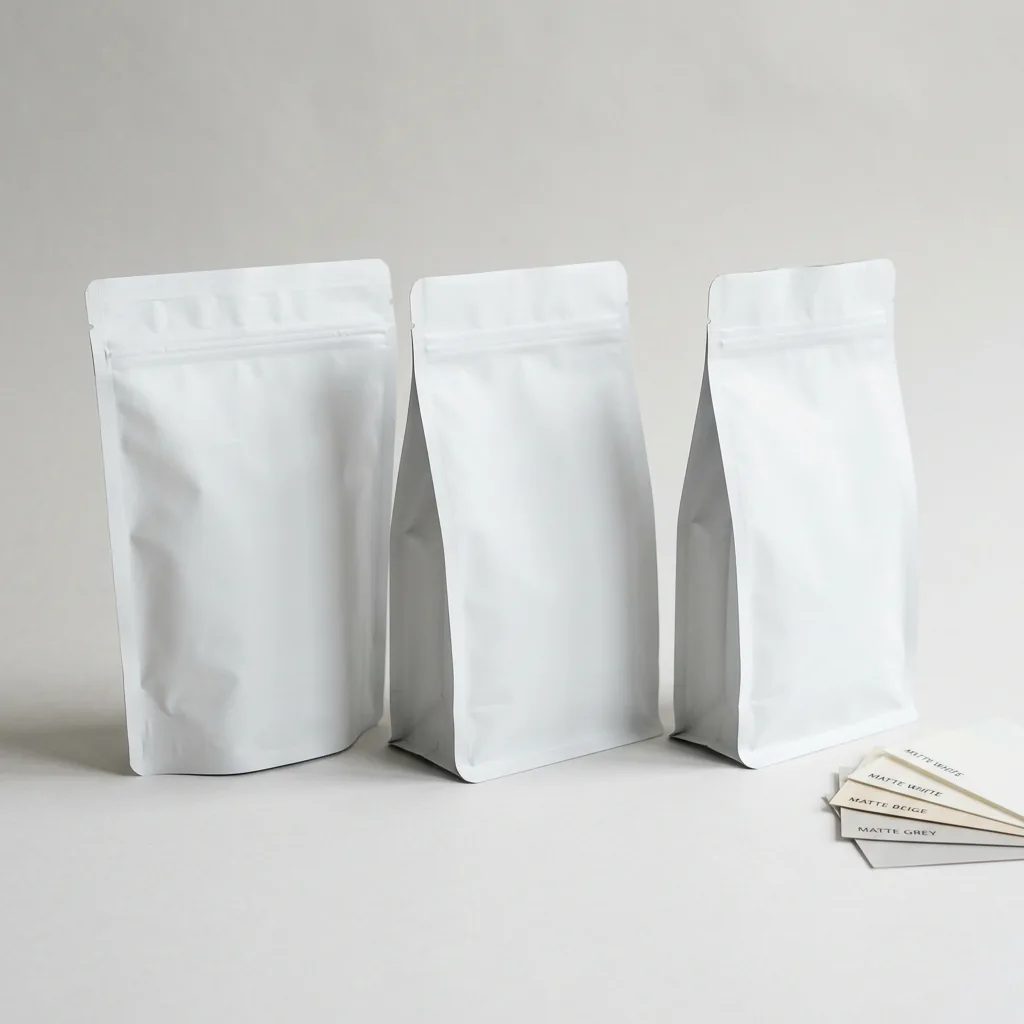
Flexible pouch materials: match the film and barrier to the packed product.
A pouch material is usually a film structure rather than one universal sheet. Print surface, barrier layer, sealant layer, closures, and converting requirements work together to protect the product and form the finished pouch. This guide explains how buyers should compare common flexible pouch materials without treating appearance, sustainability, and shelf life as interchangeable claims.
Packaging structure, material, and production guidance
Define the protection job
Barrier selection starts with product sensitivity and shelf life.
The right film depends on what can damage or escape from the packed product. Moisture can soften dry foods or reduce powder flow; oxygen can affect flavor, color, nutrients, and oils; light can degrade sensitive ingredients; aroma can enter or leave the pack; grease and chemicals can challenge seals or film layers. A target shelf life should be supported by product-specific testing rather than inferred from a material name alone.
- ✓ List sensitivity to moisture, oxygen, light, aroma, grease, puncture, and temperature.
- ✓ Confirm the intended shelf life, distribution climate, storage conditions, and opening pattern.
- ✓ Ask for relevant transmission data, but do not treat laboratory film values as a guarantee for the converted pouch.
- ✓ Include seals, zipper tracks, valves, spouts, folds, and pinhole risk in the final barrier review.
Laminated structures
Different layers can handle printing, strength, barrier, and heat sealing.
Flexible pouch laminates combine layers because one material may not provide print quality, stiffness, puncture resistance, barrier, and sealability at the same time. Review the film laminate option as a starting point, then confirm the actual product-contact layer, adhesive system, film gauge, seal window, and regulatory requirements with production samples.
- ✓ Outer layers support print protection, handling strength, stiffness, and surface appearance.
- ✓ Barrier layers control oxygen, moisture, aroma, grease, or light according to product needs.
- ✓ Inner layers must seal reliably and meet applicable product-contact requirements.
- ✓ Adhesives, curing, ink systems, and residual-odor control also belong in the specification.
High barrier and foil
Foil-lined and high-barrier films are not automatic synonyms.
Aluminum foil can provide strong light, oxygen, moisture, and aroma protection when it remains intact. Compare foil-lined film with high-barrier film using the actual shelf-life, opacity, flexing, filling, sealing, and disposal requirements. Metallized appearance alone does not establish equivalent barrier performance.
- ✓ Use foil when the product genuinely needs its barrier and light-blocking properties.
- ✓ Compare foil, metallized, and transparent barrier alternatives with measurable requirements.
- ✓ Test folded and converted pouches because barrier can change around creases, seals, and fitments.
- ✓ Do not describe metallized film as aluminum foil unless the construction actually includes foil.
Paper appearance
Kraft-look pouches still need a functional film and seal strategy.
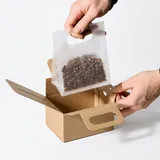
A kraft pouch material can provide a paper-led appearance, but the exact laminate, sealant, barrier, window, closure, and coating determine actual performance. A brown surface is a design cue, not proof that the full pouch is recyclable, biodegradable, or compostable.
- ✓ Separate visual preference for kraft from measurable barrier and disposal requirements.
- ✓ Confirm whether the paper is structural, decorative, coated, or laminated to plastic film.
- ✓ Test scuffing, moisture exposure, print contrast, zipper bonding, and seal consistency.
- ✓ Use qualified, market-specific sustainability language instead of broad material claims.
Recyclable-ready routes
Mono-material direction can reduce complexity but still requires local validation.
A recyclable-ready film should be evaluated against the same product protection and production criteria as a conventional laminate. Do not reduce barrier so far that food loss, leakage, or rejected production creates a larger problem, and do not make universal recyclability claims when collection varies by region.
- ✓ Define the target market and applicable collection or store-drop-off route.
- ✓ Confirm compatible inks, adhesives, zipper, valve, spout, and labels.
- ✓ Review barrier and seal performance after converting, filling, and distribution tests.
- ✓ Keep documentation for the exact production structure rather than relying on a family-level claim.
Qualification plan
Approve the converted pouch, not only a film data sheet.
Material selection ends with a filled-package test plan. Review seal strength, leakage, drop or compression exposure where relevant, puncture, flexing, odor, migration or food-contact documentation, zipper and fitment performance, artwork durability, and shelf-life results. Production conditions such as sealing temperature, dwell time, pressure, fill contamination, and line speed can change the outcome even when the nominal film is unchanged.
- ✓ Request the proposed full structure, total gauge, layer functions, and product-contact material.
- ✓ Test filling and sealing on the intended equipment or with the selected co-packer.
- ✓ Approve artwork, color, surface feel, odor, seal appearance, and closure operation on production-intent samples.
- ✓ Document acceptable tolerances and revalidate when film, adhesive, ink, fitment, or production equipment changes.
Frequently asked questions
Questions buyers ask about this topic.
What material is commonly used for flexible pouches?
Flexible pouches often use single films or laminated structures based on PE, PP, PET, PA, paper, aluminum foil, metallized layers, or barrier coatings. The right combination depends on product contact, shelf life, sealing, strength, printing, and market requirements.
Are foil pouches always the highest-barrier option?
Foil can provide very strong light, moisture, oxygen, and aroma barrier when intact, but suitability also depends on flex cracking, pinholes, seals, folds, closures, filling, and distribution. Some products can use transparent or metallized high-barrier alternatives.
Are kraft pouches recyclable?
Not automatically. Some kraft-look pouches contain paper laminated to plastic or barrier layers, and local collection systems vary. The full material structure and target market must be checked before making a recyclability claim.
Can a recyclable-ready pouch provide high barrier?
Some mono-material-oriented structures can provide useful barrier, but performance depends on coatings, layers, closures, and the product requirement. Shelf life, seal integrity, processing, and local recycling acceptance should all be validated.