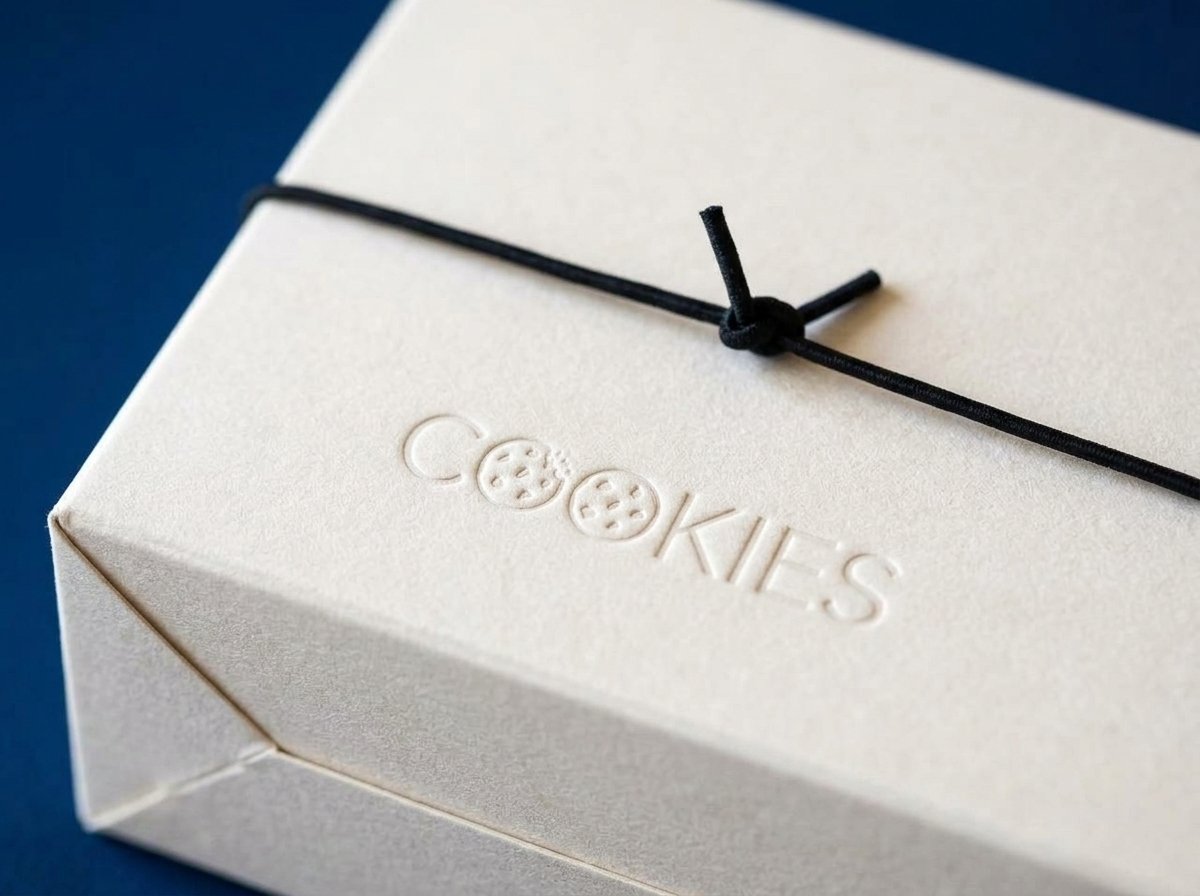
Blind embossing on textured paper
The uninked relief uses light and paper texture rather than printed color. Approve emboss depth, fine detail, paper stretching, and clearance from the cord position on the chosen stock.
Zero wasted space. Save 20% on shipping.
Custom sizing. No die or setup fees.
Skip DIY. Free expert design support.
Cookie packaging · tactile gift presentation
Custom cookie gift boxes built as one-piece self-locking flip-top folding cartons, with an off-white textured paper surface, no color print or foil, blind embossing, a wax-cord tie, and a three-cookie tray layout to review before sampling.
Structure
One-piece self-locking flip-top folding carton, die-cut and supplied flat
Material direction
250–300gsm off-white textured specialty paperboard with a natural matte surface
Finish route
Uninked blind embossing, with cotton or wax cord and optional side staples

Visual proof points
These supplied visuals focus on the closed gift-box profile, tactile blind embossing, cord treatment, self-locking paperboard construction, and the pictured three-cookie tray arrangement. The final tray material, cookie contact route, and dimensions should follow the real product and destination requirements.
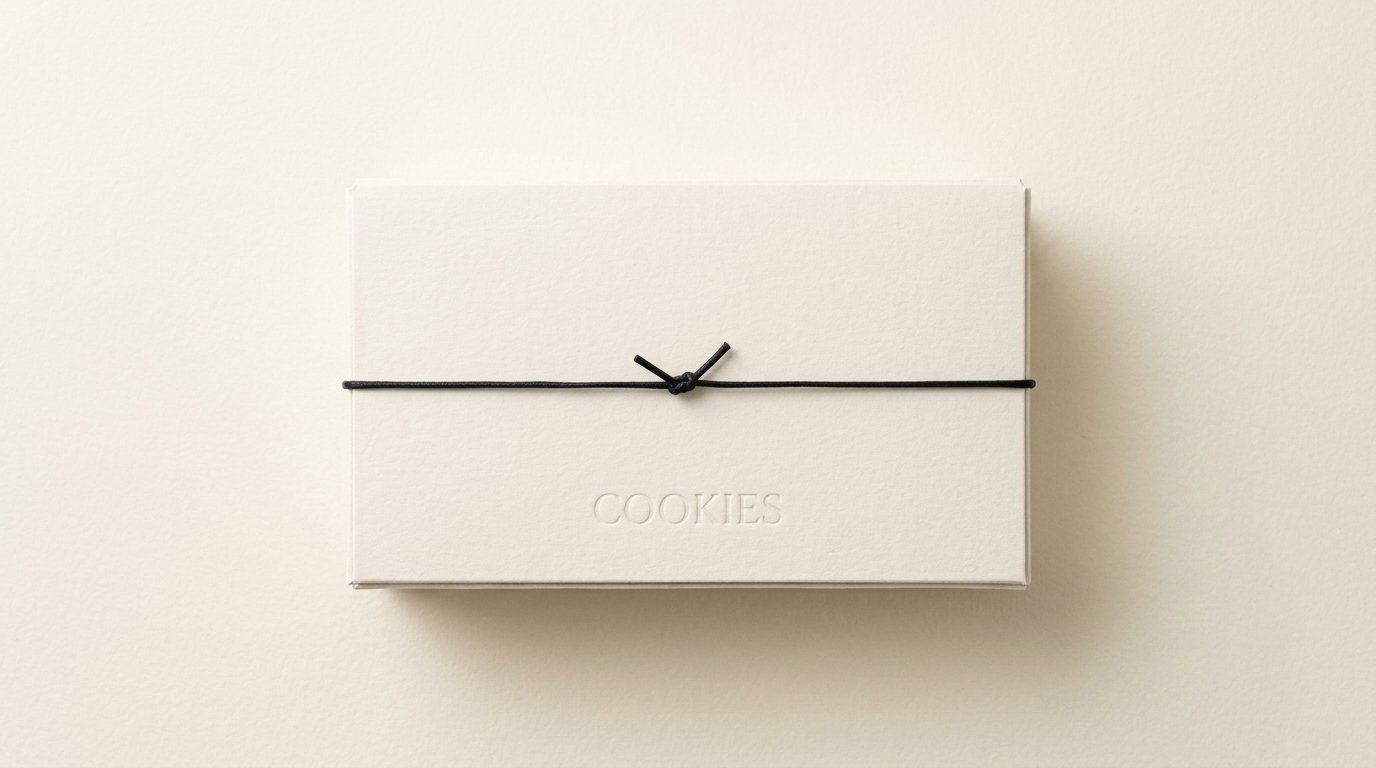
Landing page reference
Review the finished silhouette, cord position, quiet front panel, textured paper surface, and blind-embossed artwork before approving the presentation route.
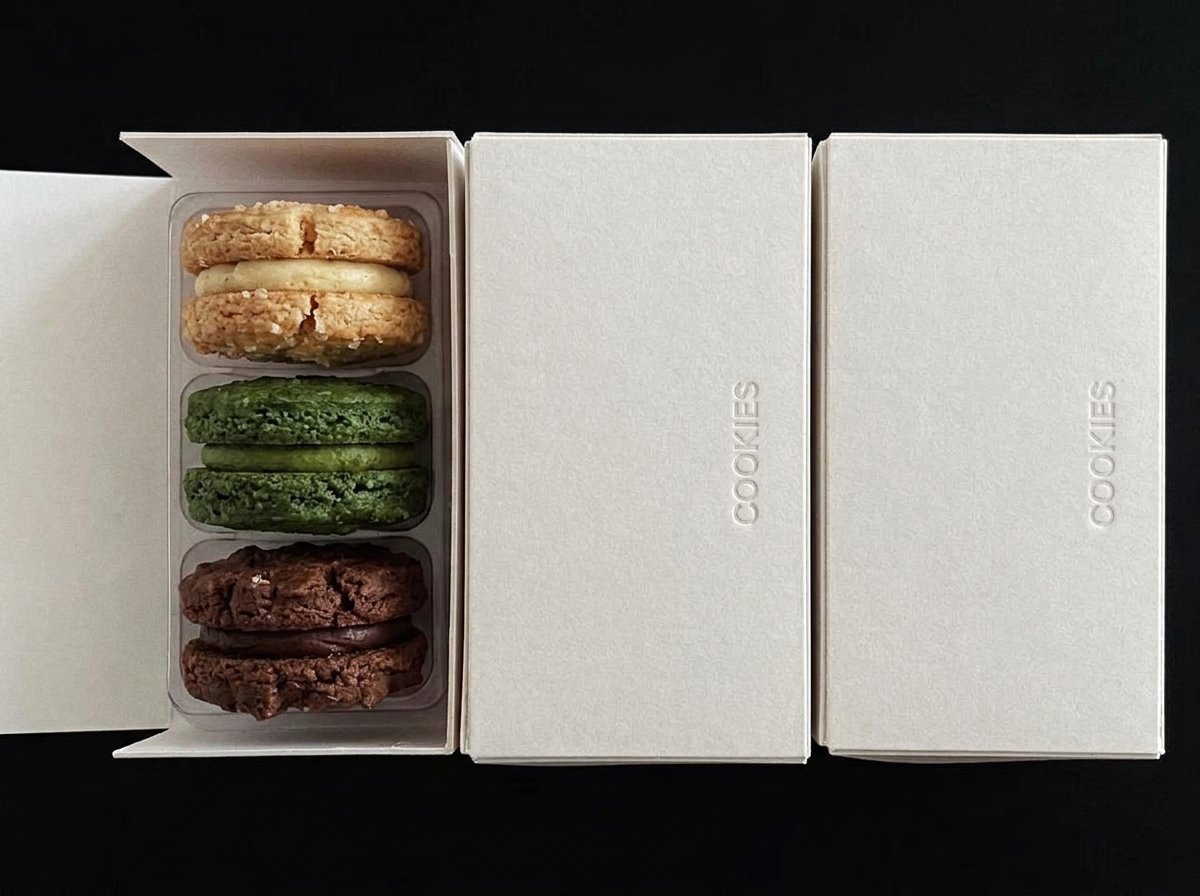
Structure reference
The supplied arrangement shows three sandwich cookies in individual tray cavities. Confirm real cookie diameter, thickness, crumb control, loading direction, and lid clearance with a physical fit sample.
The uninked relief uses light and paper texture rather than printed color. Approve emboss depth, fine detail, paper stretching, and clearance from the cord position on the chosen stock.
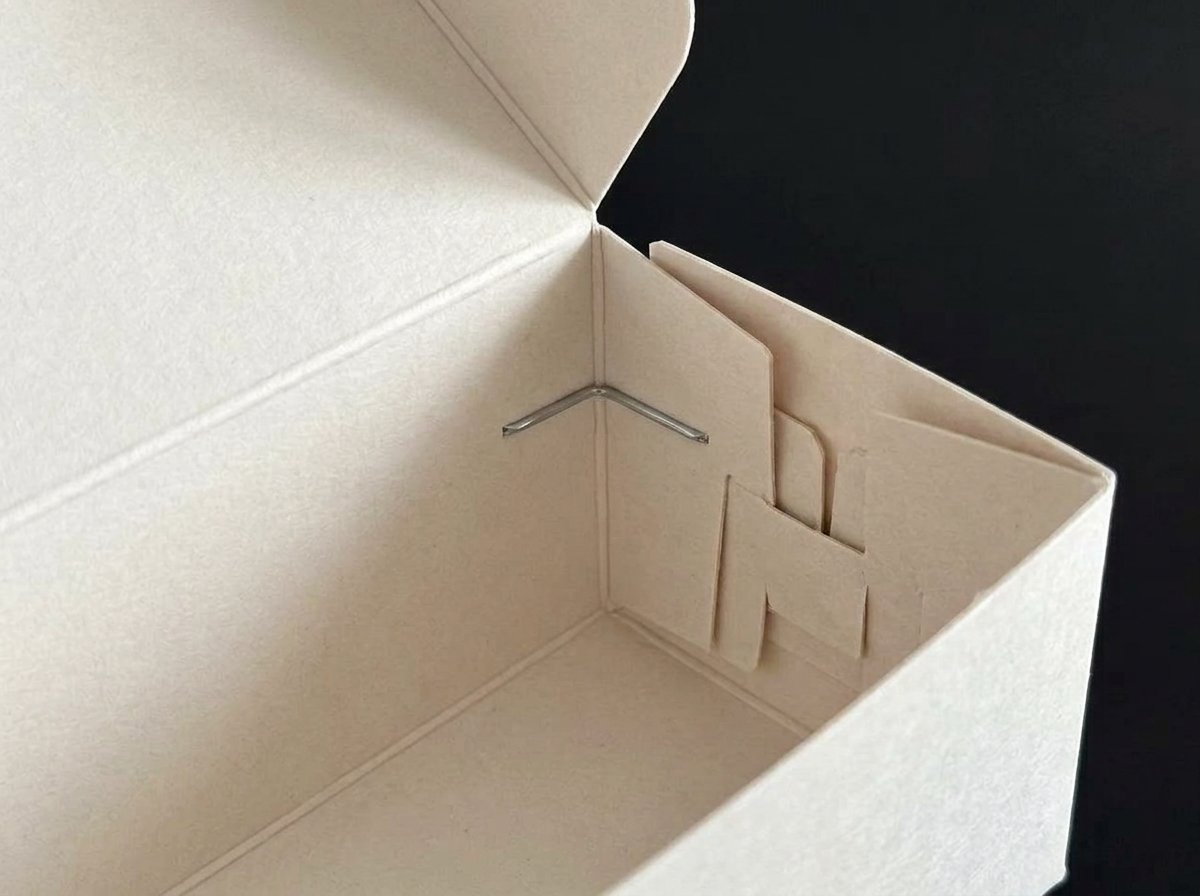
Use this construction view to review scored folds, lock panels, and optional staple reinforcement. The final locking sequence and holding force need converted-sample testing.
The pictured cookie fit is a visual reference only. Final cavity geometry and any food-contact documentation must follow the actual cookie, primary wrap, handling process, and market requirements.
Customization options
Start with the tactile paperboard and uninked emboss route, then confirm the closure, tray, cord, and any staple reinforcement as one converted packaging system.
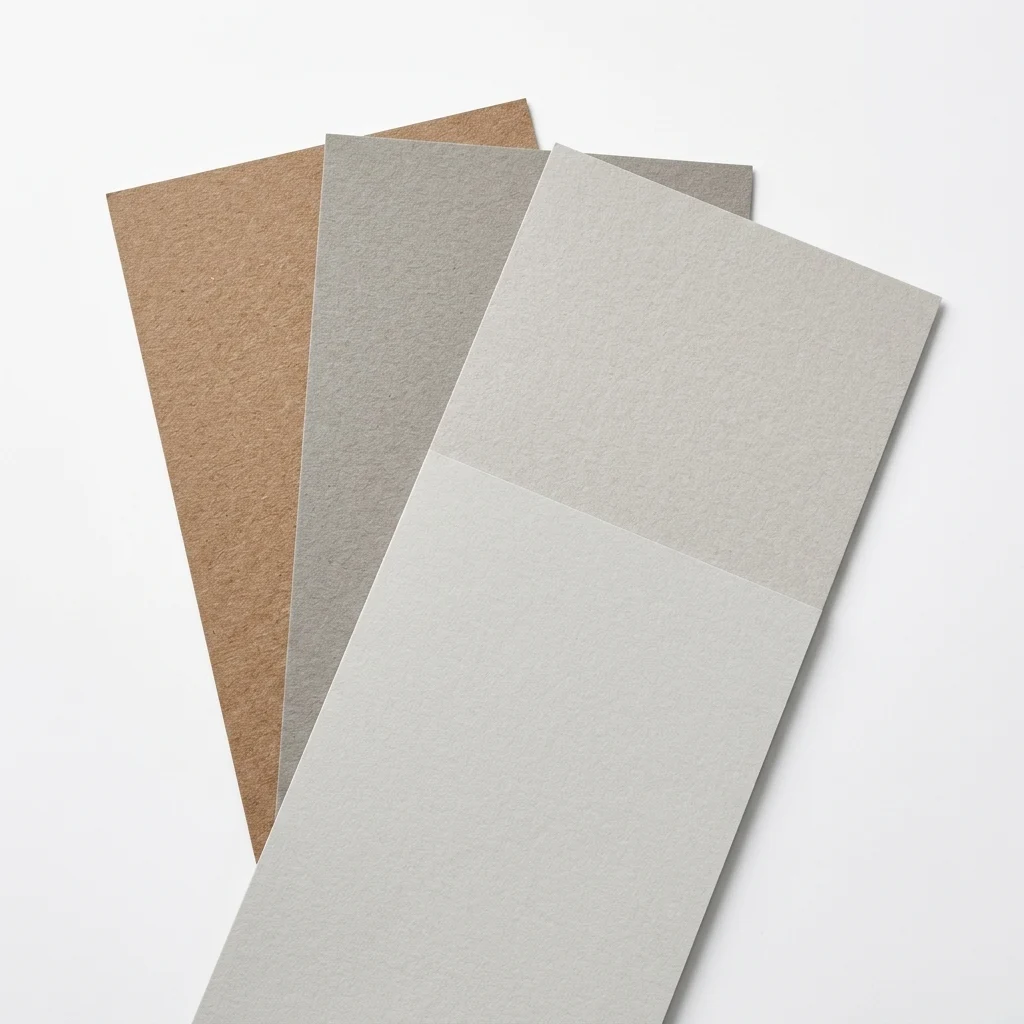
Material / Art Paper
Pearlescent, tactile, or textured paper for a more expressive premium surface.
Review this option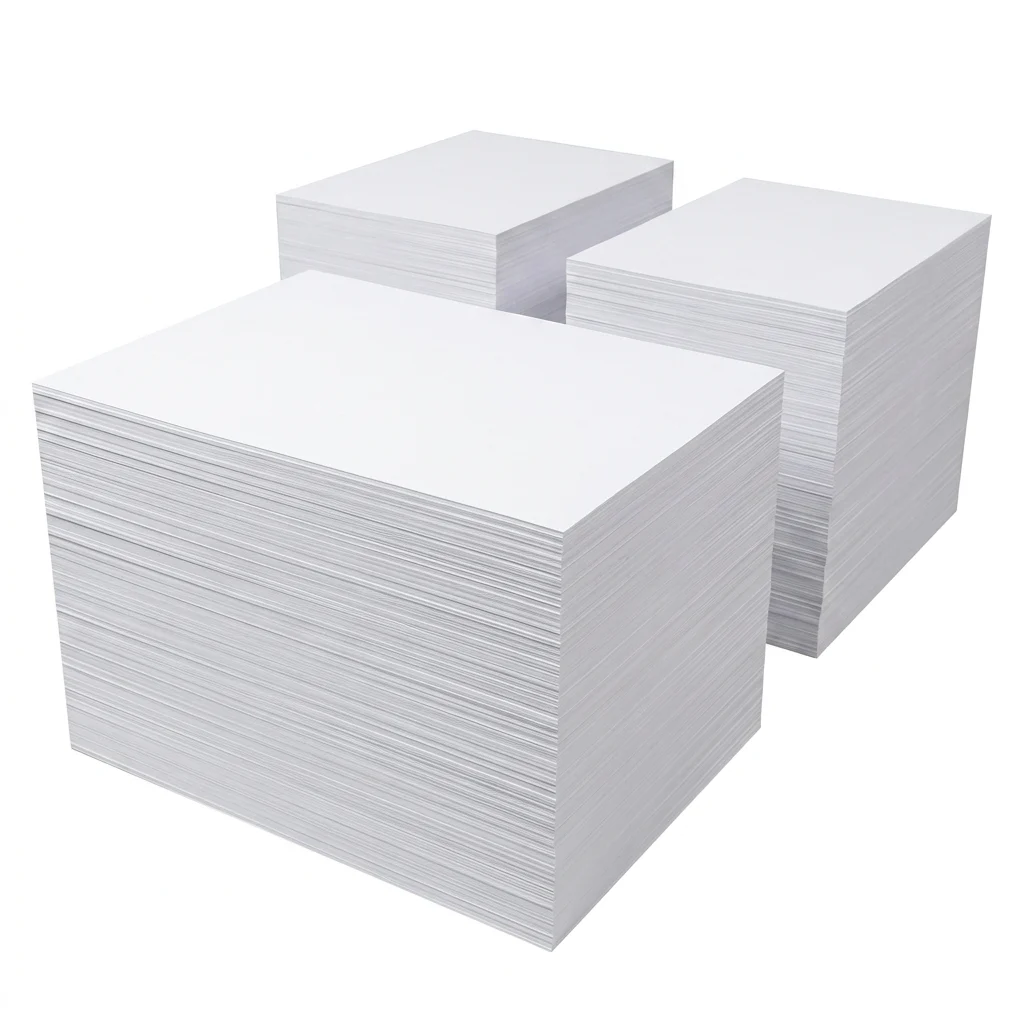
Material / Art Paper
Uncoated writing or art paper with a softer, more natural print character.
Review this option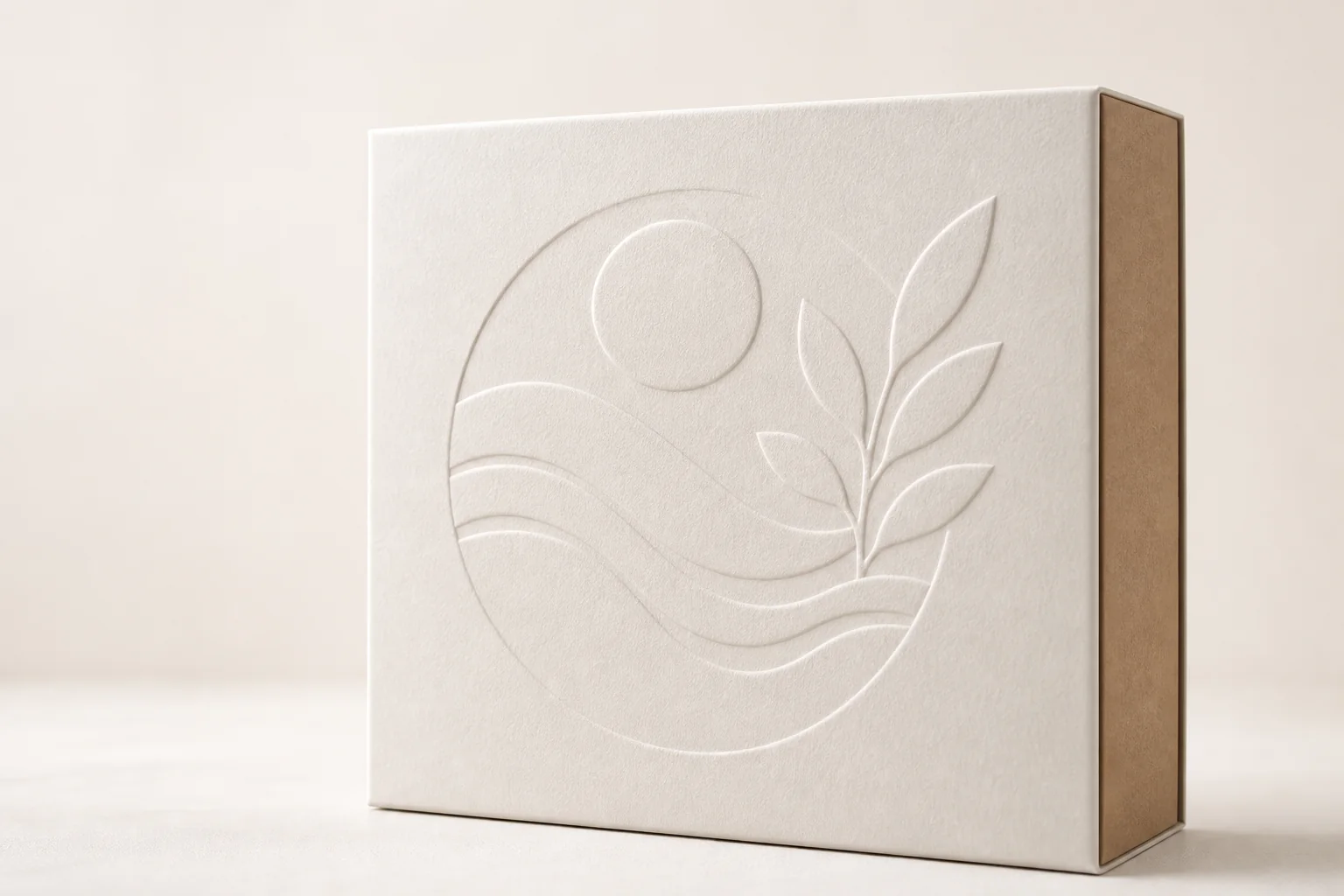
Finishing / Visual
Raised detail that adds tactile emphasis to logos or decorative artwork.
Review this option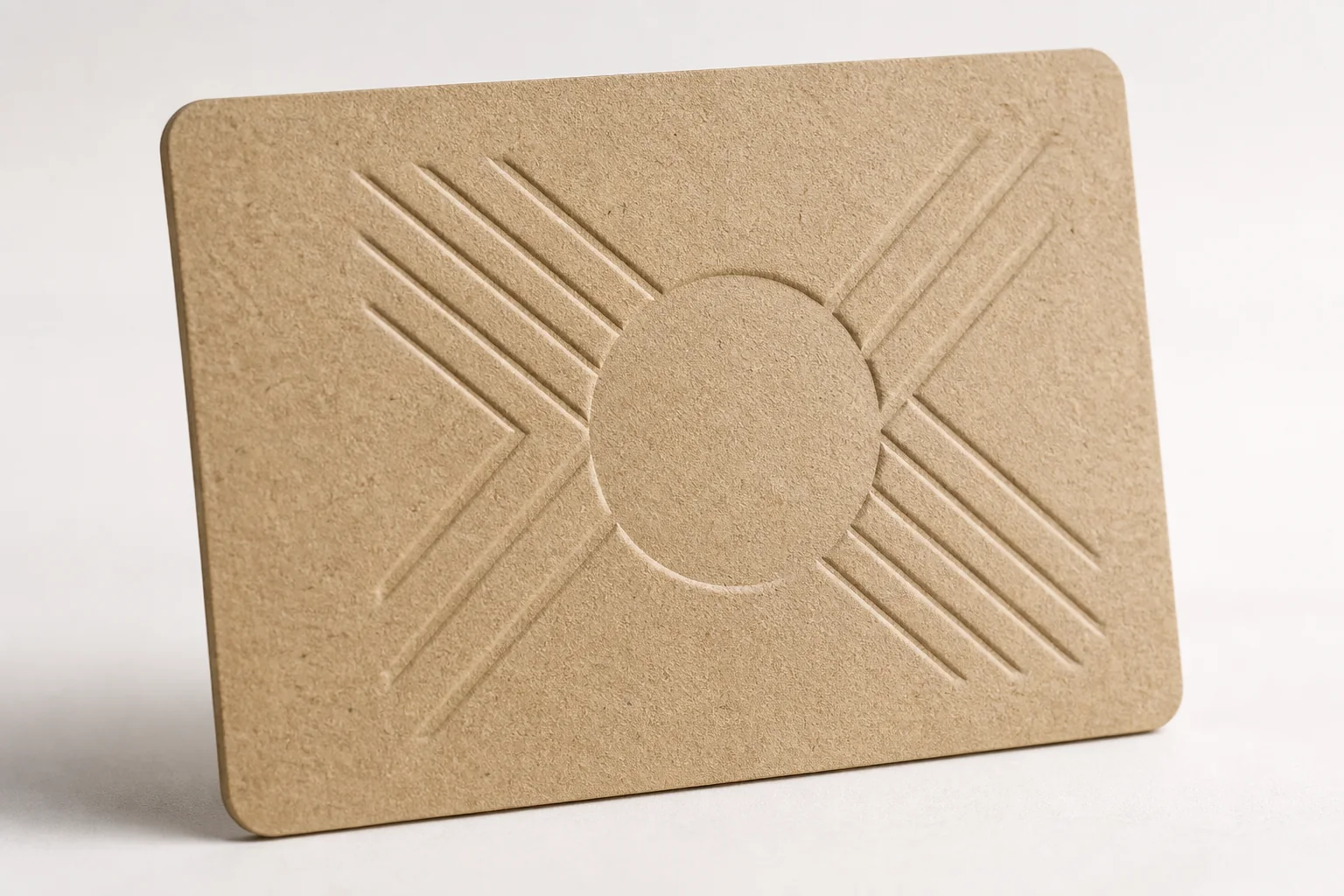
Finishing / Visual
Pressed-in detail for understated texture on premium paper and wrapped boxes.
Review this optionPrint and finish route
This visual direction gets its character from paper texture and physical relief rather than ink, foil, or film. The main production question is how the selected stock responds to folding, emboss pressure, cord friction, and the final cookie pack-out.
Raised lettering or a cookie icon creates a tone-on-tone identity without colored ink, foil, or a gloss contrast.
Approve relief depth, paper stretch, edge sharpness, and artwork clearance from scores, locks, and cord contact points.
The off-white specialty paper retains a soft, uncoated, low-reflection character instead of a laminated retail finish.
Compare grain, shade, scuff response, crease cracking, and batch variation on the actual paperboard before locking production.
A fine cotton or wax cord adds an external gift closure, while small side staples can reinforce the folded structure when the converted sample supports them.
Confirm cord tension, knot position, staple placement, product clearance, and whether metal is acceptable for the intended market and recycling route.
Artwork element
Production route
Effect on this box
Proofing check
Cookie mark or name
Blind embossing without ink
A tactile, monochrome identity that follows the paper color.
Keep fine relief and type away from scored folds, lock cuts, staple positions, and the cord path.
Off-white paper appearance
Textured specialty paperboard
A naturally matte, subtly textured gift-box surface.
Approve the physical paper batch for shade, grain, stiffness, folding behavior, and emboss response.
Gift tie
External cotton or wax cord
A simple tactile closure and restrained gifting cue.
Test cord tension and knot placement with the filled box so the lid and cookies are not compressed.
Side reinforcement
Optional metal staples
Visible mechanical reinforcement at selected folded side panels.
Confirm the staple is needed, placed away from food and tray clearance, and accepted for the final sales market.
Specification summary
Use this as a planning baseline rather than a food-contact specification. Final size, tray material, primary wrapping, cookie-contact requirements, board grade, and tolerances must be confirmed with actual samples and destination-market requirements.
Packaging type
Custom cookie gift box for a three-cookie presentation or a size-adjusted cookie assortment
Box structure
One-piece self-locking flip-top folding carton with die-cut, scoring, and folding/gluing operations
Material baseline
250–300gsm off-white textured specialty paperboard with no film lamination
Surface finish
Natural matte paper texture with uninked blind embossing; no colored print, foil, or silver finish in the supplied visual direction
Closure detail
External cotton or wax cord tie; optional small side staples subject to converted-sample approval
Tray reference
Supplied visual shows a three-cavity tray; final cavity count, material, and food-contact route require product and market confirmation
Cookie fit
Pictured sandwich-cookie layout is a visual reference; final dimensions follow actual cookie diameter, thickness, wrap, and clearance testing
Production baseline
Die-cutting, scoring, folding/gluing, blind emboss tooling, and optional staple/cord application
Quote drivers
Finished size, paper stock, emboss area, die-cut complexity, cord, staples, tray, primary wrap, quantity, packing method, and delivery destination
Buyer decisions
The reference proves a refined paperboard gift presentation, not a universal food-packaging specification. Decide the real cookie pack-out and contact boundary first, then select the tray, paper, emboss depth, cord, and reinforcement around the approved structure.
Cookie diameter and thickness
Cookie count and tray orientation
Primary wrap or direct-contact boundary
Filled weight and crumb sensitivity
Target box dimensions
Emboss artwork
Cord and staple preference
Quantity and delivery destination
Off-white textured specialty paperboard
Tactile, uncoated gift presentation with tone-on-tone blind embossing
Shade, grain, folding response, and emboss depth need physical approval
Uncoated woodfree paper route
A softer natural paper appearance where a related uncoated stock is available
Stiffness and scuff performance may differ from the pictured specialty stock
Blind embossing only
Minimalist identity without colored ink, foil, or film
Fine relief and contrast depend on paper grain, lighting, and emboss tooling
Tray plus primary wrap review
Cookie assortments that need clearer separation and handling control
Tray material and food-contact evidence must follow the actual cookie and market requirements
Also suitable for
Proof before mass production
Structural sample: Checks self-locking panels, lid alignment, cord tension, staple placement, flat storage, and filled-box closure.
Emboss proof: Checks artwork relief, paper stretching, visual contrast, fine-line performance, and score-line clearance on the selected stock.
Cookie fit test: Checks cavity dimensions, cookie movement, crumb control, lid clearance, product removal, and the final contact boundary.
Sampling and production path
Begin with the packed cookie rather than the exterior box. Once fit, handling, and contact boundaries are clear, the tactile surface and gift details can be tested on a converted sample.
1
Measure the actual cookie diameter, thickness, filled weight, primary wrap, count, loading orientation, crumb sensitivity, and required clearance.
2
Set the self-locking panels, lid, scores, glue areas, tray geometry, cord path, and optional staple position around the real pack-out.
3
Test flat storage, box setup, lock hold, tray loading, lid closure, cookie movement, cord tension, and product removal before artwork is finalized.
4
Approve blind emboss depth, paper texture, shade, fold appearance, scuff response, and relief placement on the selected board.
5
Confirm the approved sample, board, emboss tooling, tray, contact documentation where needed, cord or staple route, packing count, and delivery requirements.
Structure reference
This one-piece paperboard gift-box route keeps the box flat for storage while creating a defined opening sequence and a broad tactile lid panel. It should be engineered from the actual cookie pack-out, not treated as transit protection by itself.
Box type
Review folding carton structure options
The attached flip-top lid and external cord create a deliberate reveal while keeping the format lighter and flatter than a two-piece rigid gift box.
The broad unprinted lid supports blind embossing and natural paper texture without competing colored graphics.
A separate tray can organize a small assortment, but its geometry should follow actual cookies, wrapping, handling, and final contact requirements.
Structure baseline
One-piece self-locking flip-top folding carton, supplied flat and converted through die-cutting, scoring, and folding/gluing.
Material and finish baseline
250–300gsm off-white textured specialty paperboard with a natural matte surface and uninked blind embossing.
Cookie-fit baseline
Three visible tray cavities in the supplied visual, to be resized and validated with actual cookies, primary wrap, and handling requirements.
Factory review inputs
Cookie samples or dimensions, filled weight, pack-out, contact boundary, artwork, desired paper, emboss file, cord or staple preference, quantity, and destination.
Details to prepare for factory review
Cookie diameter and thickness
Cookie count and tray orientation
Primary wrap or direct-contact boundary
Filled weight and crumb sensitivity
Target box dimensions
Emboss artwork
Cord and staple preference
Quantity and delivery destination
Production FAQ
Send cookie diameter, thickness, filled weight, count, primary wrap or direct-contact boundary, target box dimensions, tray preference, emboss artwork, cord or staple request, quantity, and delivery destination.
It can be considered, but cookie movement, breakage, crumbs, and product removal should be tested with the real pack-out. The supplied visual shows a separate three-cavity tray, which is a useful starting point for structured presentation.
That cannot be determined from the visual reference. Confirm the contact boundary, paper, inks if later added, coatings, tray, and required documentation with the supplier for the actual market before making food-contact claims.
No. Blind embossing creates a raised or recessed paper relief with a physical die, so the visible contrast comes from light, shadow, and paper texture rather than added ink or foil.
The cord is an external gift detail, while optional staples can reinforce selected folded side panels. Both should be reviewed with a filled structural sample so they do not interfere with closure, tray clearance, or the desired material route.
Treat it as a presentation box unless an approved transit test proves otherwise. Cookie gift boxes usually need a separate protective mailer or shipper when parcel handling and breakage risk matter.
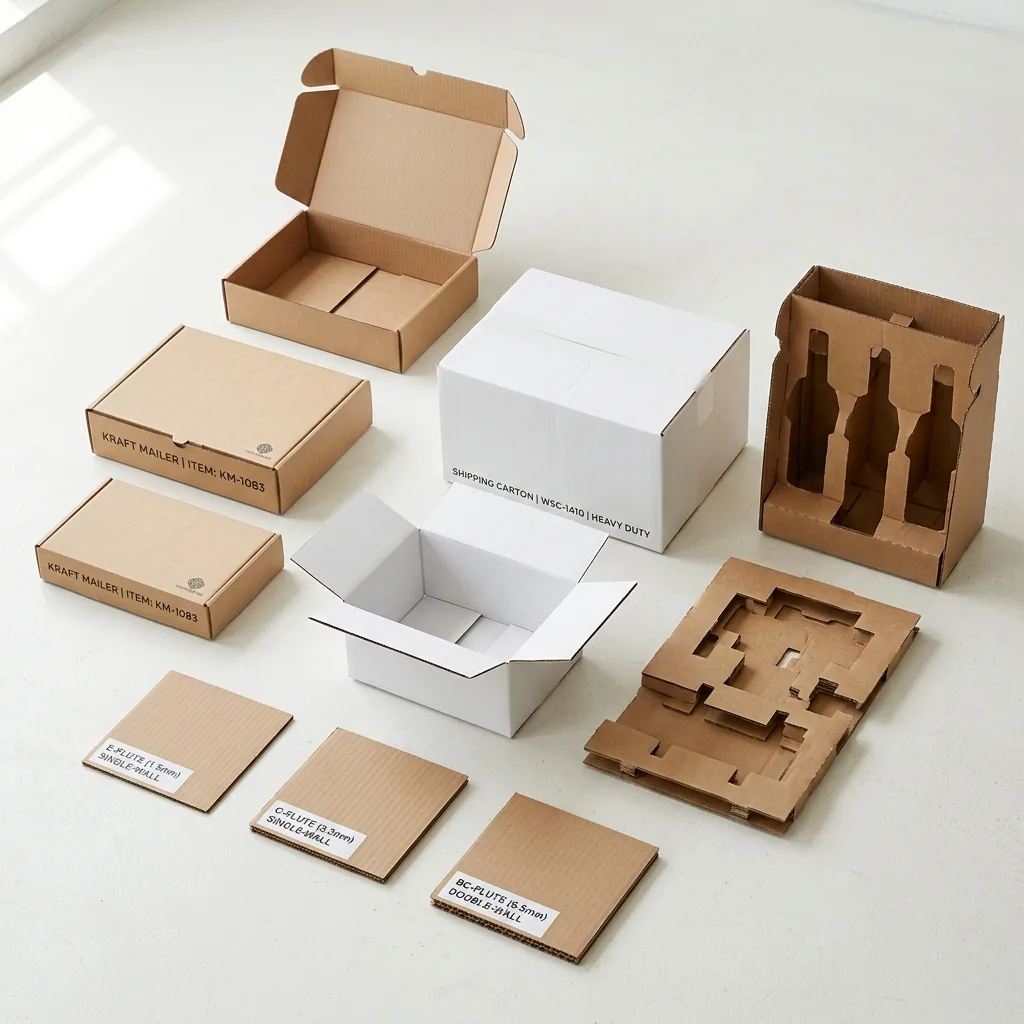 Corrugated Boxes Choose the corrugated box route by shipping risk, product weight, print needs, insert fit, and the opening experience your customer should receive.
  Folding Cartons Compare paperboard carton styles by structure, product fit, material, print area, and production use before choosing a quote-ready packaging path.
 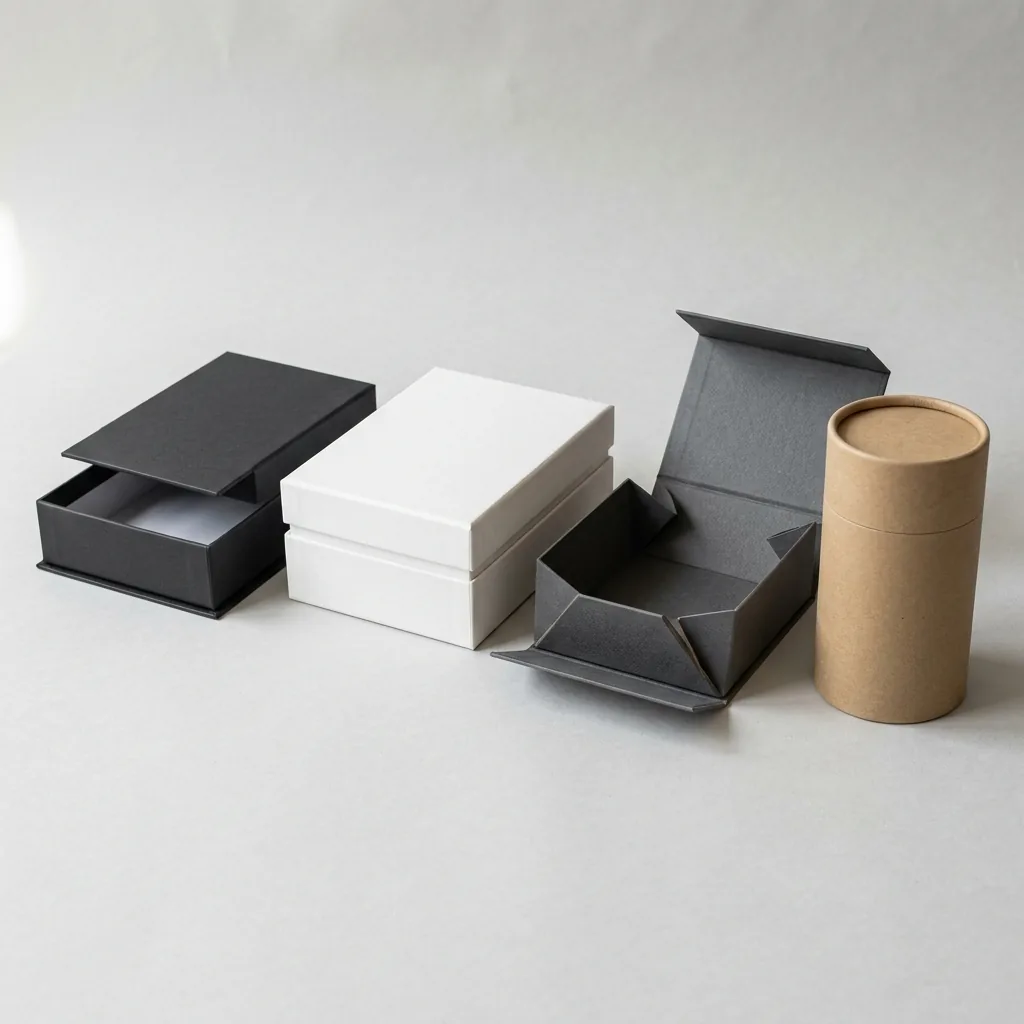 Rigid Boxes Choose rigid boxes when the packaging needs a stronger gift-box feel, durable presentation, premium surface finishing, and a more controlled opening experience.
 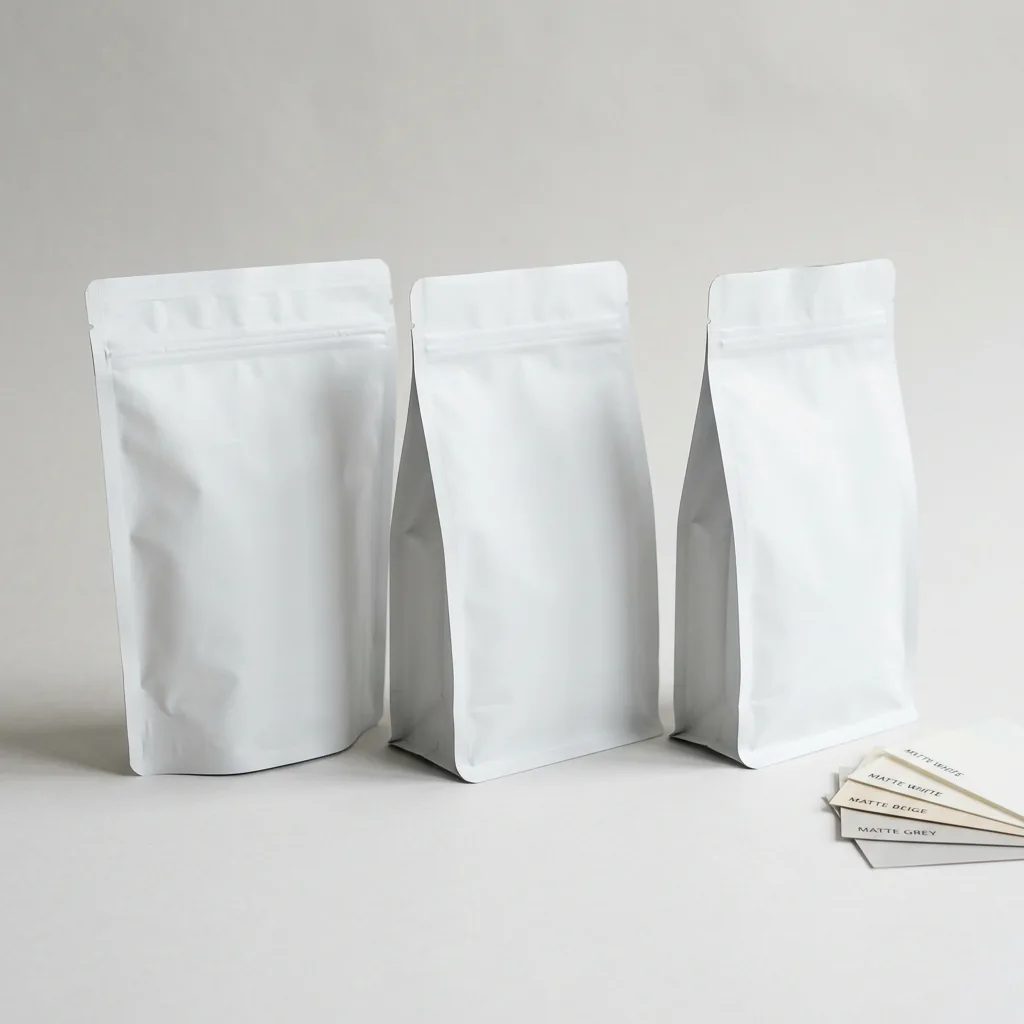 Flexible Pouches Use custom pouches when the packaging needs to stay light, portable, resealable, shelf-friendly, or efficient for food, refills, masks, samples, and pet products.
 Product structures
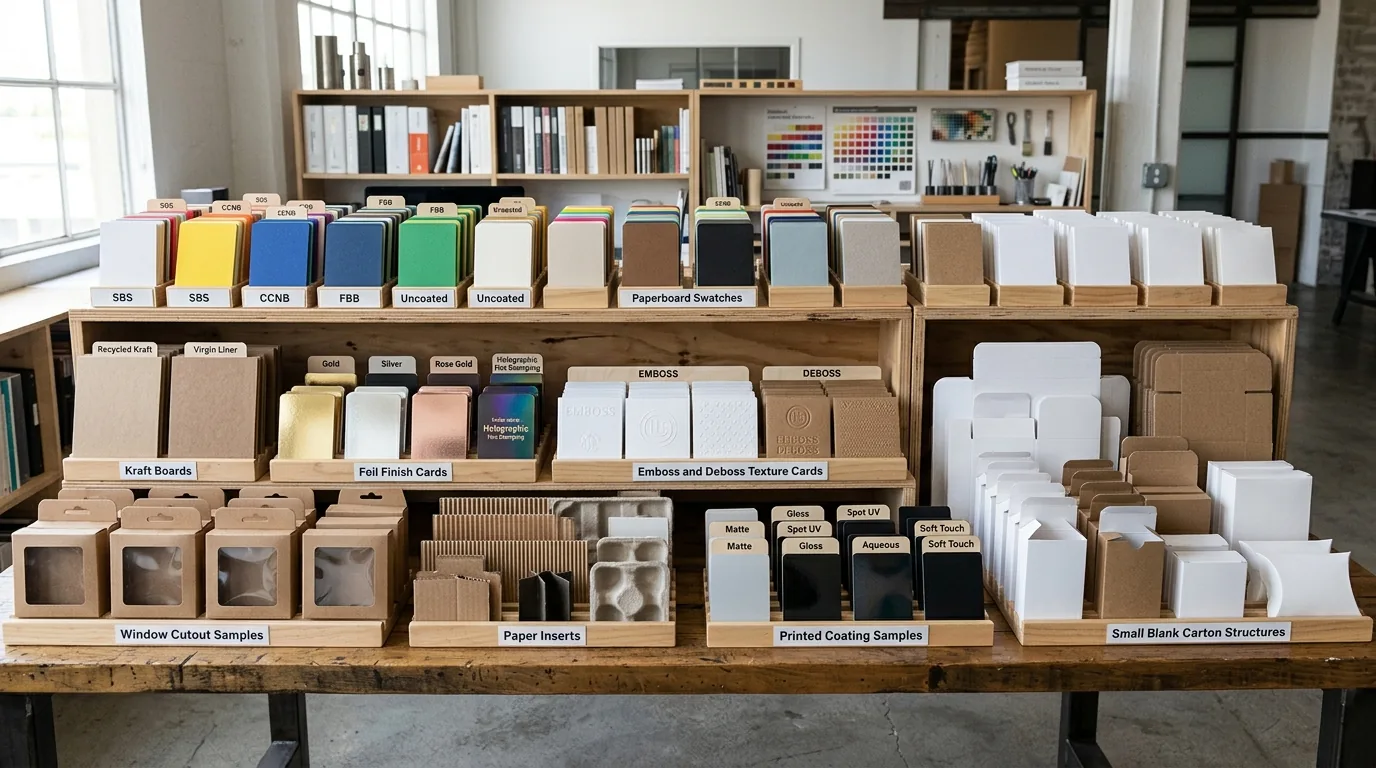
Option Library
Browse materials, print methods, finishes, inserts, and packaging features before choosing a structure.
Browse all options Cosmetics & Skincare Packaging routes for skincare launches, beauty refill sets, cosmetic retail units, and premium PR kits.
  Food & Beverage Packaging Packaging routes for coffee pods, tea, cookies, confectionery, bakery products, snacks, and gift assortments.
  Apparel & Fashion Mailer, pouch, wrap, and gift-ready packaging directions for fashion and lifestyle products.
  Subscription Boxes Packaging ideas for recurring kits, campaign boxes, sample programs, and DTC launch testing.
  Eco-Friendly Packaging Paper-based structures, recycled boards, FSC options, and lower-plastic packaging paths.
 Solution paths
Solution paths
Solution paths
Solution paths
Solution paths
Inspiration Library
Get inspired by browsing creative packaging concepts and see how brands from your industry are designing their packaging.
Browse inspiration library Services overview Compare design, customization, production, and eco support before choosing a project route. Packaging Design Turn a product idea into packaging that is ready for sampling, shelf presentation, and production.
 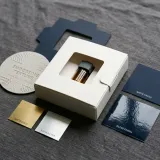 Packaging Customization Dial in every detail, from board choice and finish to window cutouts, inserts, openings, and small functional touches.
 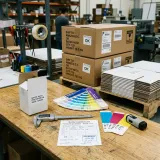 Packaging Production Move from approved sample to reliable production with global sourcing, low minimums, and pricing built for growing brands.
 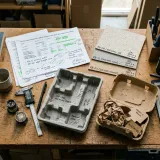 Eco Support Build packaging with clearer sustainability choices, including FSC paper, recycled board, soy-based ink, and plastic-reduction options.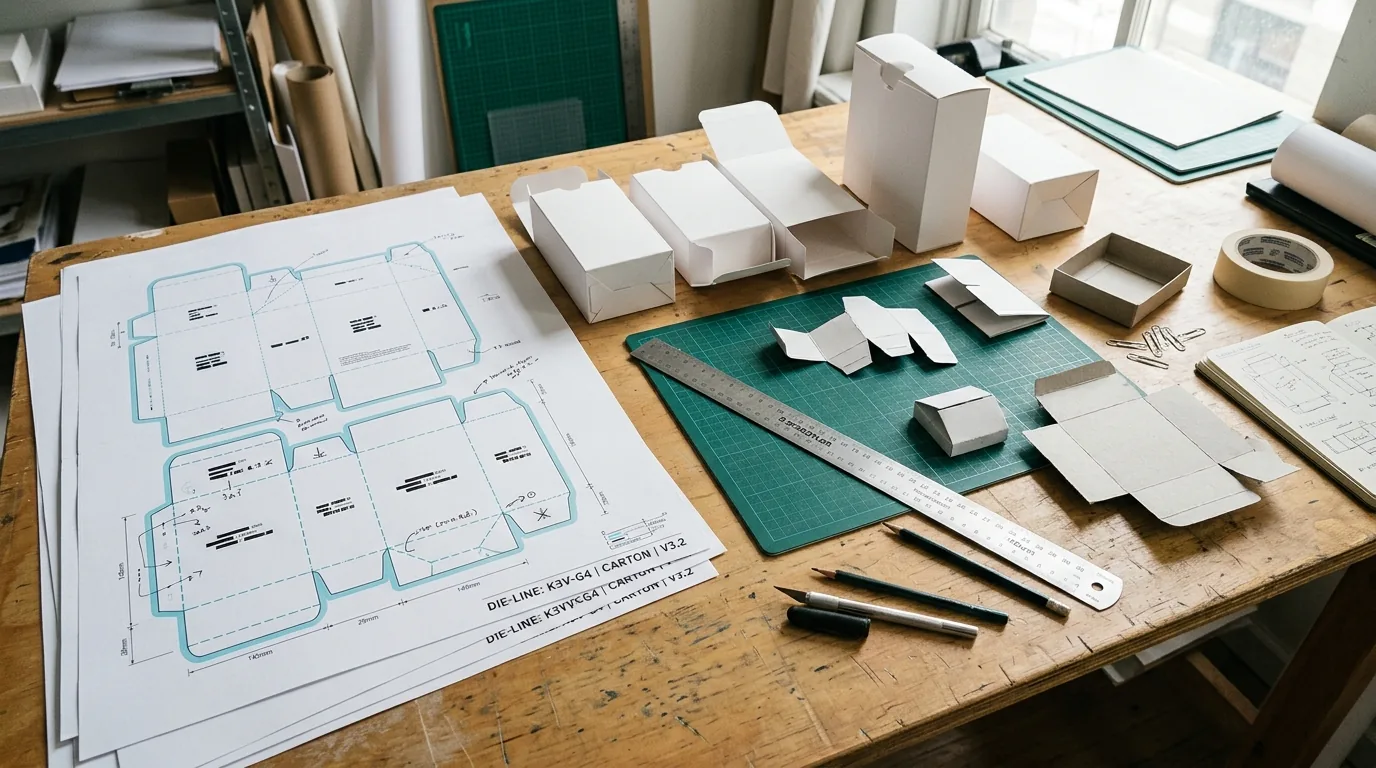
Download 2000+ Templates & Dielines
2000+ customizable packaging templates and dielines, with 3D mockups. 100% customizable. 100% downloadable.
Learn more BLOG Read packaging ideas, buyer guides, and material explainers for custom projects.
  Case Studies Review detailed packaging structures, materials, finishes, fit checks, and production decisions.
  Help Center Find answers for artwork, quotes, samples, production timing, and delivery support. Inspiration Library Browse packaging concepts, industry examples, and launch-ready design directions.
  Terms & Conditions Review project, ordering, production, delivery, and website usage terms.
  Privacy Policy See how customer details, quote inquiries, and project information are handled.
Help Center
Get practical answers before you request a quote, from artwork files and sampling steps to production timing, shipping notes, and packaging project details.
Visit help center About YATBRAND Learn how we support custom packaging projects from planning to production.
  Contact Us Share product details, quantities, timelines, and custom packaging goals. Request a quote Send size, quantity, material, artwork, and timeline details for a quote-ready review.
  Our Approach See how packaging guidance, samples, production control, and delivery details work together. Quality & Production Review how sampling, production, inspection, and delivery support fit together.
YATBRAND LLC
Custom packaging support for brands that need structure guidance, material options, sampling, quality review, and delivery coordination.
Learn about YATBRAND
Packaging specialist
Ask about structure, materials, samples, or quote details.